How To Be A Stronger Cyclist In Your 50s & 60s Than You Were In Your 40s
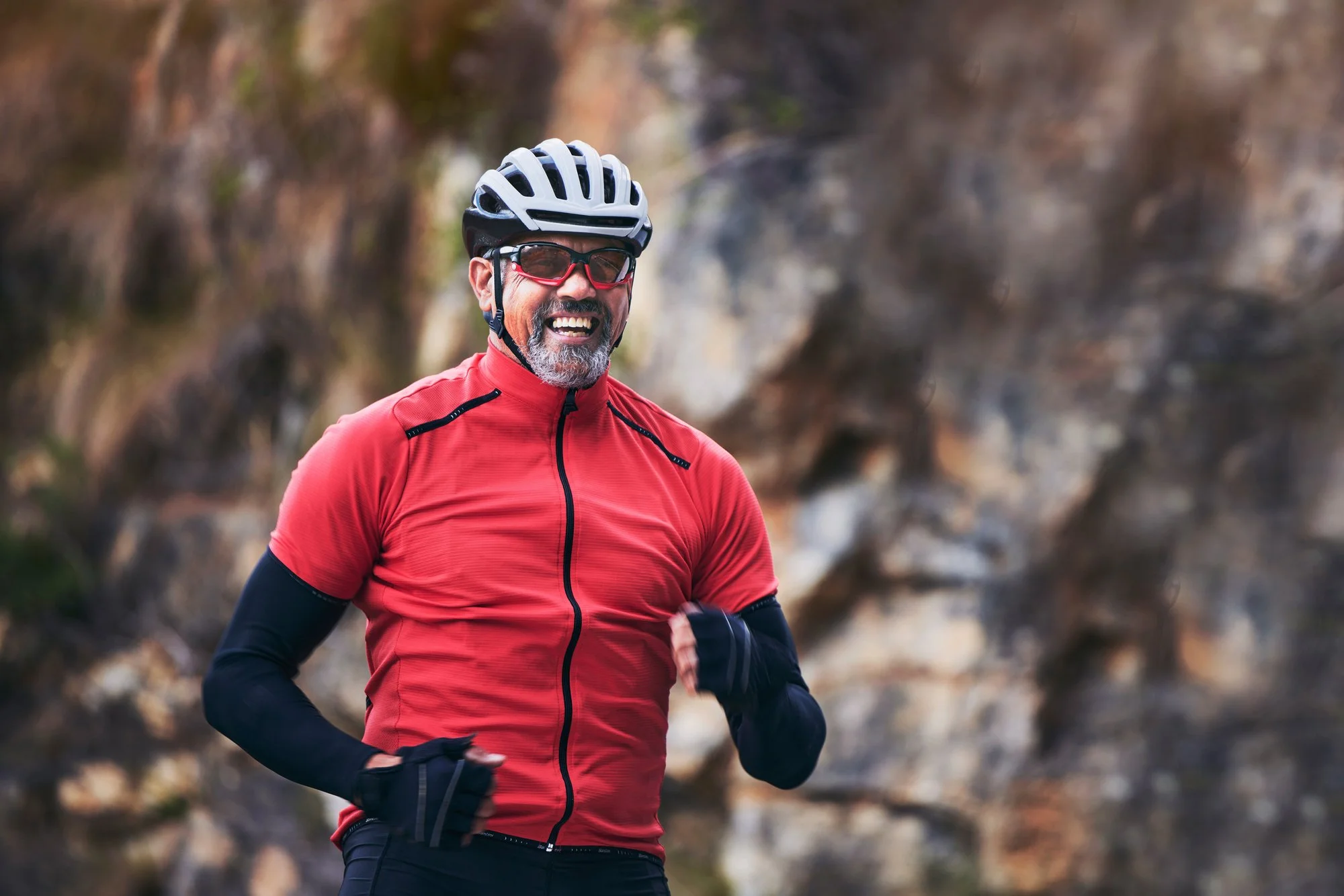
"Fitness declines with age"... this is an accepted wisdom. Performance peaks somewhere in your 30s. Everything after that is a slow, gradual decline where you come to terms with it and start to accommodate what your body can no longer do.
But... Does it have to be so?
There is evidence that paints a different picture.
There are cyclists in their 50s and 60s riding stronger than they did in their 40s — and stronger than a significant number of cyclists a decade younger than them. And research confirms it. Sure, some are outliers who won the genetic lottery… but certainly not all of them. They've done something specific — and specifically different — from cyclists who plateaued or declined.
Digging in and understanding what this "something specific, something different" is, is worth your time.
What The Research Actually Shows
The commonly cited comment — that endurance performance declines with age — is technically true, yes. But stopping there without unpacking further is incomplete.
The decline is real, but it's small compared to what's often assumed, and it depends almost entirely on training status. Research on lifelong endurance athletes has found that men in their 80s can still produce aerobic power roughly double that of untrained men the same age [1]. The decline curve for athletes who continue training intelligently is dramatically shallower than the population average — which is largely a curve of decreasing activity, not decreasing capacity.
More significantly for masters cyclists, research over recent decades has documented that performance in this demographic has been improving at a faster rate than in younger athletes [2]. The improvement is most pronounced in older age groups... which is at odds with the traditional view of decline. The findings highlight that most masters athletes have historically been under-trained rather than over-aged and that, as training approaches have become better understood and better applied, older athletes have benefited enormously.
The ceiling isn't where most masters cyclists assume it is. And the assumption is a bigger performance limiter than the physiology.
What Cyclists Getting Stronger In Their 50s Do Differently
The masters cyclists who continue to improve into their 50s share identifiable patterns that are applied consistently and intelligently as compared to by cyclists who plateau or decline.
They train what's most trainable at their age.
Research on endurance physiology identifies three primary determinants of performance: VO₂max, threshold and economy [1]. Of these, threshold and economy are more trainable than VO₂max in masters athletes and decline more slowly with age. Cyclists who continue improving into their 50s target these specifically — while cyclists who decline typically don't distinguish between the three at all.
They protect what's declining fastest.
After 40, fast-twitch muscle fibres are lost at a faster rate than slow-twitch. Once lost, they're difficult to rebuild. If you want to maintain what these fibres provide, cyclists need to incorporate deliberate work that preserves this specific quality — most commonly through structured strength training. Research on masters cyclists specifically confirms that resistance training practices differ significantly between those who maintain performance into their 50s and those who don't [3].
They train more consistently — not more hours.
The compounding effect of consistent training over years matters more than peak weeks. The masters cyclists who improve into their 50s tend to have longer training histories and fewer extended interruptions — and they've built training approaches that fit sustainably into their lives, rather than approaches that require ideal conditions to execute.
They recover deliberately.
Age doesn't reduce your capacity to train hard. It changes what recovery looks like between hard efforts. The cyclists who improve into their 50s treat recovery as a separate skill to be trained, refined, and prioritised — not as time off from real training.
The Overlooked Advantages Of The 50s
There's also an other element to consider. Being in your 50s isn't just a matter of managing decline. There can be genuine advantages that a 40-year-old typically doesn't have access to.
Life circumstances often change.
Careers stabilise. Children become more independent. The variable that limits training more than any other for the 40+ recreational cyclist — time — often becomes more manageable in the 50s than in the 40s.
Training intelligence accumulates.
The mistakes of the 30s and 40s become the wisdom of the 50s. Riders who paid attention learn what doesn't work — and stop wasting effort on it. This is a genuine performance advantage that only accrues with time.
Emotional stability improves training decisions.
The tendency to overtrain, chase segments, or ride hard when the body needs recovery tends to soften in the 50s. This isn't loss of ambition, but rather mature judgment producing better outcomes.
The riders who capitalise on these advantages — combined with a training approach genuinely built for their physiology — often find themselves riding stronger, more consistently and with more genuine enjoyment than they did a decade earlier.
Why Some Cyclists In Their 50s Are Stronger Than Cyclists In Their 40s
There are cyclists in their 50s who are outperforming cyclists in their 40s — including on climbs, in group rides and in event performance. This isn't rare.
The mechanism isn't mysterious. A 50-year-old who trains intelligently, protects their power generating capacity, manages recovery and structure training for age-appropriate stimulus routinely outperforms a 40-year-old riding the same group rides with no structure, no strength training, no attention to the specific factors that drive adaptation yet hoping still "just strong enough" to mask all this and "get away with it".
Age is one variable in performance. But it's not the most important one. Training approach, consistency, recovery management and structural physical preparation matter more. All of these are within the control of any masters cyclist willing to understand what actually drives performance at their stage of life.
Frequently Asked Questions
Is there a physiological ceiling to how much a cyclist in their 50s can improve?
There is, but it's much higher than most riders think — and considerably higher than what typical recreational training reaches. Research consistently finds meaningful room for improvement in cyclists who begin training more intelligently, regardless of age. The ceiling is most often not the limiting factor.
Does this require training more hours than a typical recreational cyclist can commit?
No — often it requires training fewer hours, but with more precision. The riders who improve into their 50s tend to have deliberately structured training that fits their lives, rather than trying to accumulate volume that isn't sustainable.
Is strength training essential to improving as a masters cyclist?
For most cyclists over 40 who want to continue improving — yes. As a physio, I'll state it more clearly... It's not an option. It's mandatory - for cycling performance and for lifelong health. The research on preservation muscle, bone density and neuromuscular function is very clear. Cyclists who improve into their 50s almost invariably incorporate resistance training in some form.
Is it too late to start improving if a cyclist is already in their 50s?
Nope! Research on masters athletes who begin serious training later in life shows meaningful adaptation is available at any starting point [4]. Lifelong training definitely gives advantages, but so does starting with a fresh, structured approach after years of unstructured riding.
References
1. Joyner, M. J., & Coyle, E. F. (2008). Endurance exercise performance: The physiology of champions. The Journal of Physiology, 586(1), 35–44. https://doi.org/10.1113/jphysiol.2007.143834
2. Lepers, R., & Stapley, P. J. (2016). Master athletes are extending the limits of human endurance. Frontiers in Physiology, 7, 613. https://doi.org/10.3389/fphys.2016.00613
3. Sæther, S. A., Aandahl, T. H., & Aspvik, N. P. (2024). Strength training among male master cyclists — Practices, challenges, and rationales. Journal of Functional Morphology and Kinesiology, 9(4), 232. https://doi.org/10.3390/jfmk9040232
4. Piasecki, J., McPhee, J. S., Hannam, K., Deere, K. C., Elhakeem, A., Piasecki, M., Degens, H., Tobias, J. H., & Ireland, A. (2019). Comparison of muscle function, bone mineral density and body composition of early starting and later starting older masters athletes. Frontiers in Physiology, 10, 1050. https://doi.org/10.3389/fphys.2019.01050