The Hidden Reason Some Masters Cyclists Feel Tired No Matter What They Do
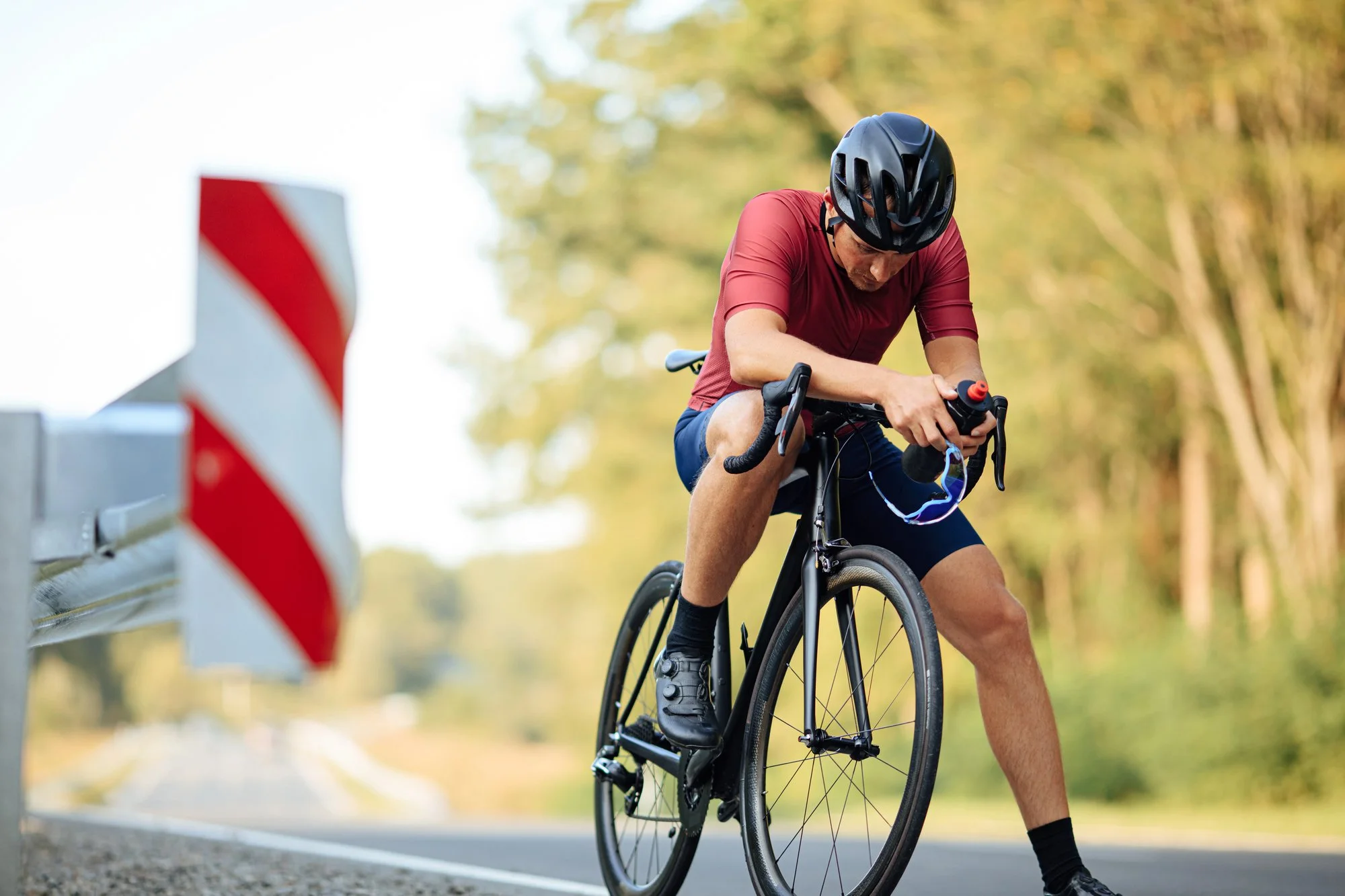
Perhaps you're not hammering it every day. Not doing massive training weeks. Riding three, four, maybe five times a week. Taking rest days. Eating reasonably well. By any standard measure, doing things right.
And yet the fatigue is there. Not occasionally — persistently, inexplicably. The kind that's present when you wake up, lingers through the working day, and sits in the legs on every ride whether it was supposed to be easy or not.
The instinct is to wonder about overtraining. But that doesn't quite fit either, because the training volume isn't excessive.
Here's what's often going on.
The Problem Isn't Training Load. It's Total Load.
Your body doesn't have separate recovery accounts for cycling and for life.
There is one pool. Every demand — a hard ride, a difficult week at work, a poor night of sleep, a stressful family situation, a heavy deadline — draws from the same physiological reserve. When the combined total of those demands consistently exceeds the capacity to recover, the result is persistent fatigue that no amount of rest days seems to fully resolve.
Sports scientists call this accumulated state 'functional overreaching' when it's temporary, and 'non-functional overreaching' when it becomes chronic. Research confirms that overtraining syndrome — which affects between 20% and 60% of athletes at some point in their careers — is characterised not simply by excessive training, but by a chronic imbalance between training and non-training stressors together [1]. The training alone may look completely reasonable on paper. It's the full picture that tips the balance.
For a busy professional in his 40s or 50s, juggling a demanding career, family responsibilities, and a serious cycling habit, the total load picture looks very different from what a training log captures.
Why This Hits Harder After 40
Every athlete carries some degree of accumulated load. But masters cyclists carry a version of it that younger riders with similar training volumes simply don't experience.
After 40, the hormonal environment that governs adaptation and recovery shifts. Testosterone trends down. Cortisol — the body's primary stress hormone — trends up, particularly in response to life stressors [2]. The balance between these two hormones is critical: testosterone drives repair, adaptation, and building; cortisol, in chronic excess, drives the opposite.
Research on endurance athletes documents this consistently. When training stress combines with life stress in the absence of adequate recovery, testosterone suppression and elevated cortisol create a physiological environment that is tilted away from adaptation and toward breakdown [3]. Training structure can be doing everything right — and this state can still develop, because the hormonal environment needed to respond to that training isn't there.
This is why the tiredness feels different from normal training fatigue. It's not just muscle soreness. It's a systemic heaviness. A flatness that doesn't shift. A sense that the body is working hard just to maintain, rather than to improve.
The Symptoms Most Riders Misread
The difficulty with this kind of fatigue is that it mimics several other things.
Flat legs on what should be an easy ride get attributed to a virus coming on. An elevated resting heart rate gets blamed on dehydration. A string of poor sessions gets written off as a temporary dip. Motivation draining away mid-week with no obvious explanation.
None of these interpretations are wrong. They're just incomplete.
The pattern that matters is this: when fatigue clusters around periods of high work or life stress — major projects, family pressure, disrupted sleep, travel — and lifts when those stressors ease, the training log isn't telling the whole story. The body is carrying more than the rides reveal.
What Changes When You See The Full Picture
The masters cyclists who break out of persistent fatigue aren't the ones who train less. They're the ones who start accounting for total load — not just training load — when making decisions about what the body needs on any given week.
That shift changes everything. It changes how a bad ride gets interpreted. It changes when to push and when to back off. It changes what happens in the 24 hours after a hard session, and how a week where work has been relentless gets managed.
Some of the riders who've made this shift describe it as one of the most significant changes in their cycling — not because they changed their training, but because they finally understood what their body was responding to. They stopped being confused by their own fatigue. They started reading it as information rather than frustration.
That kind of clarity is available to any master cyclist prepared to look at the full picture. Not just the rides. All of it.
Frequently Asked Questions
How do I know if I'm in functional overreaching versus something more serious?
Functional overreaching typically resolves with one to two weeks of reduced load. If fatigue persists beyond that timeframe despite genuine rest, or if it is accompanied by persistent mood disturbance, significant sleep disruption, or illness susceptibility over a prolonged period, it warrants a conversation with a doctor.
Is it possible to be under-training and still experience this kind of fatigue?
Yes. This type of fatigue isn't exclusively from training volume — it stems from total systemic load. A rider training four hours a week in a high-stress life can feel more depleted than a rider training ten hours a week in a low-stress one. Volume is only one variable.
Is a complete break the right response when fatigue like this sets in?
Not necessarily. Complete rest isn't always the right response and, for masters cyclists, extended inactivity brings its own problems. The question is how to adjust total load intelligently — which often means modifying training quality and quantity in a specific way rather than stopping entirely.
Can better nutrition make a meaningful difference here?
Yes. Research on masters class endurance athletes confirms that nutritional timing and composition directly affect recovery capacity and subsequent performance [4]. Under-fuelling compounds hormonal imbalance and extends the recovery deficit. Getting nutrition right doesn't solve the total load problem — but it does raise the threshold at which that load starts to cause problems.
References
1. Cadegiani, F. A., & Kater, C. E. (2022). Overtraining syndrome symptoms and diagnosis in athletes: Where is the research? International Journal of Sports Physiology and Performance, 17(5), 675–680. https://doi.org/10.1123/ijspp.2021-0521
2. Hackney, A. C., & Aggon, E. (2018). Chronic low testosterone levels in endurance trained men: The exercise-hypogonadal male condition. Journal of Biochemistry and Physiology, 1(1), 103. https://pmc.ncbi.nlm.nih.gov/articles/PMC6311356/
3. Meeusen, R., Duclos, M., Foster, C., Fry, A., Gleeson, M., Nieman, D., Raglin, J., Rietjens, G., Steinacker, J., & Urhausen, A. (2013). Prevention, diagnosis, and treatment of the overtraining syndrome: Joint consensus statement of the European College of Sport Science and the American College of Sports Medicine. Medicine & Science in Sports & Exercise, 45(1), 186–205. https://doi.org/10.1249/MSS.0b013e318279a10a
4. Smith, J. W., Jeukendrup, A., & Osterberg, K. L. (2023). Carbohydrate-protein drink is effective for restoring endurance capacity in masters class athletes after a two-hour recovery. Frontiers in Physiology, 14, 1098861. https://doi.org/10.3389/fphys.2023.1098861