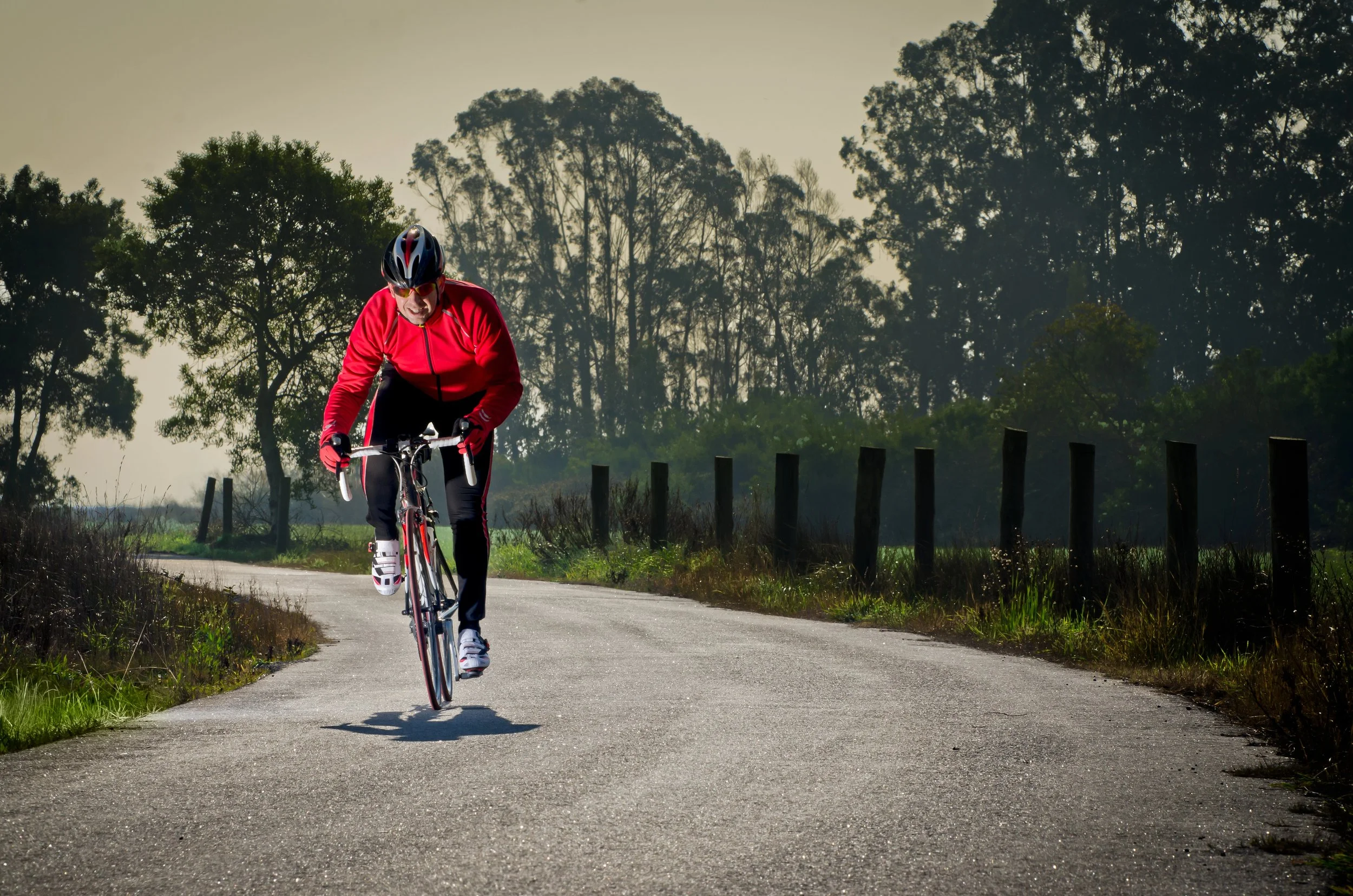
You roll out with the group and within minutes you're already working harder than everyone else.
Your legs feel heavy. Your breathing is laboured. You're deep in the red before the first climb even starts.
Here's the thing — it's not your fitness. It's your warm-up. Or more accurately, the lack of one.
Why Masters Cyclists Need More Warm-Up Time Than Younger Riders
After 40, your body takes longer to shift from rest to performance mode.
Your cardiovascular system needs extra time to increase cardiac output. Your muscles need more time to reach optimal working temperature. And your nervous system — responsible for coordinating power and pedal efficiency — takes longer to "wake up."
Research confirms this. A 2020 study published in the *International Journal of Sports Physiology and Performance* found that a structured warm-up significantly improved cycling time trial performance by accelerating oxygen delivery to working muscles — an effect particularly relevant for older athletes whose VO₂ kinetics are naturally slower (Losa-Reyna et al., 2020).
Skip the warm-up, and you spend the first 20–30 minutes of your group ride paying that physiological debt. On a climb, that debt gets called in immediately.
The Two Things a Proper Warm-Up Must Do
Most riders think a warm-up just means "spin easy for a few minutes."
That's not enough.
An effective warm-up for masters cyclists must do two things: raise your muscle temperature and prime your cardiovascular system for the work ahead.
Raising muscle temperature increases the speed of muscle contraction, improves elasticity, and reduces injury risk. Research from Loughborough University found that muscle temperature directly correlates with power output — warmer muscles produce more force (Faulkner et al., 2013).
Priming the cardiovascular system means getting your heart rate, stroke volume, and blood flow to the muscles elevated before the hard work begins. Do this properly, and your first climb feels manageable instead of catastrophic.
The Masters Warm-Up Protocol: 15 Minutes That Pay You Back
This protocol requires no extra equipment and fits into any pre-ride routine.
Minutes 0–8: Easy spin
Ride at a very easy, conversational effort — around 50–55% of your maximum heart rate. This is lighter than you think. The goal is progressive temperature elevation, not effort.
Minutes 8–12: Build to moderate effort
Gradually increase to around 65–70% of maximum heart rate. You should be breathing noticeably but still able to speak in short sentences.
Minutes 12–15: Two short activations
Perform two 20-second efforts at higher intensity — around 80–85% of max heart rate — with 60 seconds easy spinning between each. These short bursts activate fast-twitch muscle fibres and flush out the initial metabolic lag that makes the first climb feel so brutal.
Keep it to two activations. Research shows that excessive high-intensity warm-up work can actually impair performance by raising lactate levels before the ride begins (Hajoglou et al., 2005).