How Better Descending Improves Your Performance Across The Whole Ride
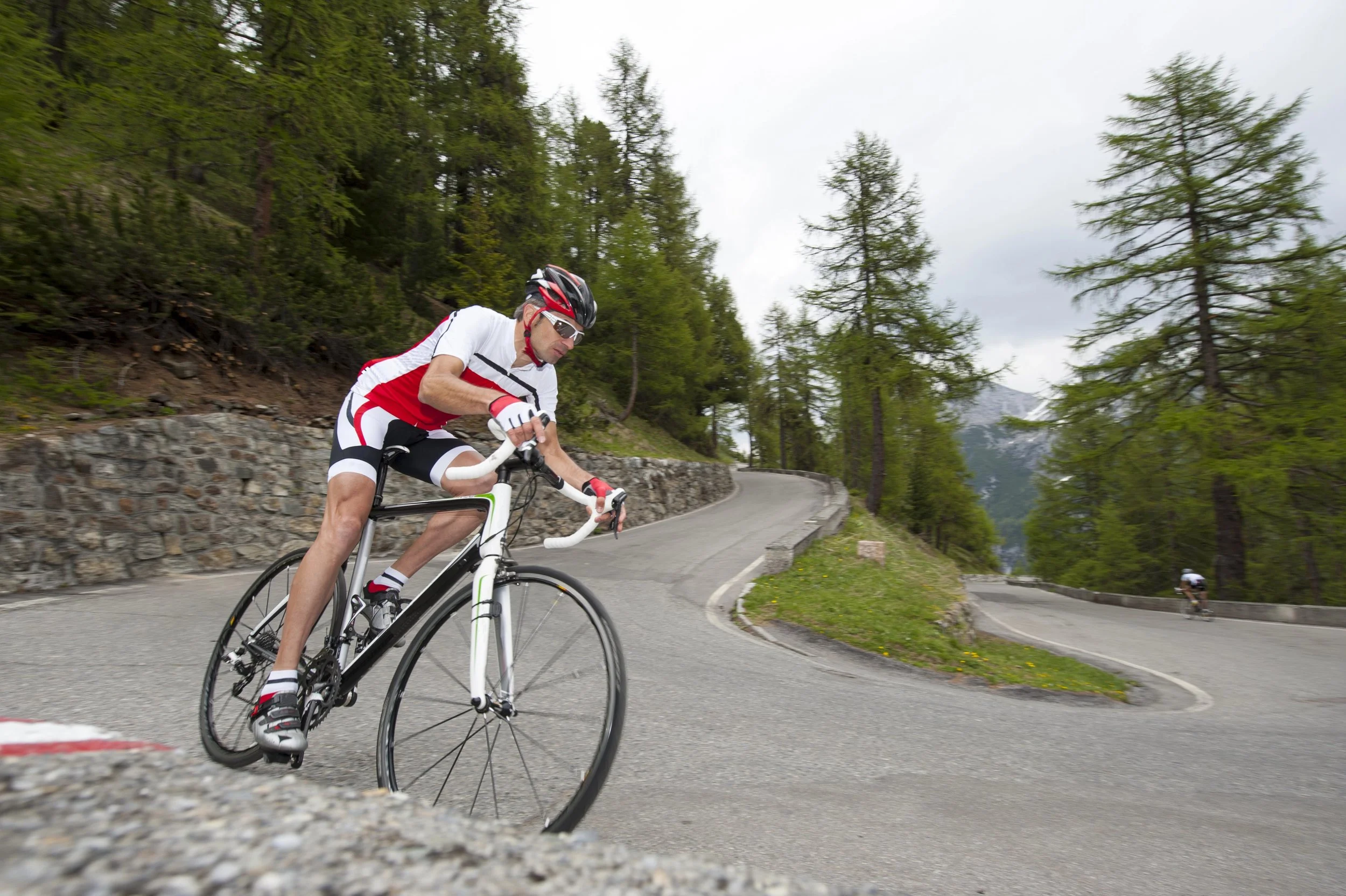
Most riders think of descending as the reward. The bit where you get to stop working after the climb.
But descending is one of the most underrated performance skills in cycling. And getting better at it changes far more than just the downhill.’
Descending Is Free Speed — And Free Energy
On a climb, your speed is capped by your power-to-weight. There's a ceiling, and physics enforces it.
On a descent, the ceiling is set by skill and confidence, not fitness. A rider who descends well covers ground faster while pedalling less, which is essentially speed you don't have to pay for with effort.
This is even more important when riding in a bunch or group. The confident descender arrives at the bottom still in the group. The rider feathering the brakes all the way down arrives detached and then has to chase back on. On the flat, into the wind, alone. You end up spending precious energy trying to bridge a gap that could have been prevented by having better descending skills and confidence.
The Four Things That Actually Change Your Descending
Descending well isn't about bravery. It's built on four specific skills, and each one is trainable [1].
Vision. Most nervous descenders look at the road just in front of the wheel. Instead, look further ahead — to the exit of the corner, not the entry. Your bike goes where your eyes go, and this single change settles your line more than anything else.
Body position. Get out of the saddle slightly, keep your weight low, outside pedal down and weighted, hands in the drops for control and braking power. This lowers your centre of gravity and lets the bike move beneath you rather than throwing you around.
Braking. Do your hard braking in a straight line before the corner — not mid-bend. Enter at a speed you're comfortable with, then release the brakes through the turn. Braking mid-corner is what unsettles the bike and unsettles you.
Line. Enter wide, aim for the apex, exit wide. A smoother line means less braking and more carried speed through the corner.
Practise these one at a time on a descent you know well. Don't chase speed — let it come naturally as your competence builds.
The Ripple Effect Across Your Riding
Better descending doesn't just improve the downhill sections of your ride — it has a flow-on effect that benefits everything else.
It means you crest climbs knowing recovery is coming, so you can climb with more freedom and less anxiety about what's on the other side. It means you hold the group over rolling terrain instead of losing contact every time the road tips down. And it means you finish a long ride with more in reserve, because you weren't rigid and hauling on the brakes every time the gradient changed.
Let me explain as a physio: tension is the enemy of control on a descent. A rigid, braced upper body transmits every bump into the bike and into you. Relaxed arms and a loose grip let the bike track the road naturally. Confidence and relaxation feed each other — and both are something worth developing deliberately, because they improve with practice at any age.
Descending well comes down to four trainable skills — vision, body position, braking, and line choice — and each one improves with deliberate, repeated practice on a descent you know well. Start by working on one skill at a time rather than trying to change everything at once, and let the speed come naturally as your confidence builds. Over time, better descending means you stay with the group, conserve energy over rolling terrain, and finish rides with more in reserve — which is a genuine performance advantage that costs you nothing extra in fitness or training hours.
Frequently Asked Questions
Is descending mostly bravery, or a learnable skill?
Overwhelmingly a skill. Vision, body position, braking, and line choice can all be developed through deliberate practice. Confidence follows competence, not the other way around.
Does better descending really affect the rest of the ride?
Yes. Conserving energy on descents and staying with the group over rolling terrain leaves you fresher for the parts of the ride where it really counts — climbs, surges, and the final stretch home.
Where's the safest place to practise?
A quiet, familiar descent with good sight lines and little traffic. Repeat it regularly, building one skill at a time rather than chasing speed.
References
1. We Love Cycling. (2025). Inside the cyclist's mind: Coping with fear of descents, traffic, and crashes. https://www.welovecycling.com/wide/2025/11/11/inside-the-cyclists-mind-coping-with-fear-of-descents-traffic-crashes-when-cycling/
2. Menaspà, P., Quod, M., Martin, D. T., Peiffer, J. J., & Abbiss, C. R. (2015). Physical demands of sprint cycling in high-level road cycling races. International Journal of Sports Physiology and Performance, 10(7), 840–844. https://doi.org/10.1123/ijspp.2014-0554