How To Structure Your Training Week So Every Ride Has A Purpose
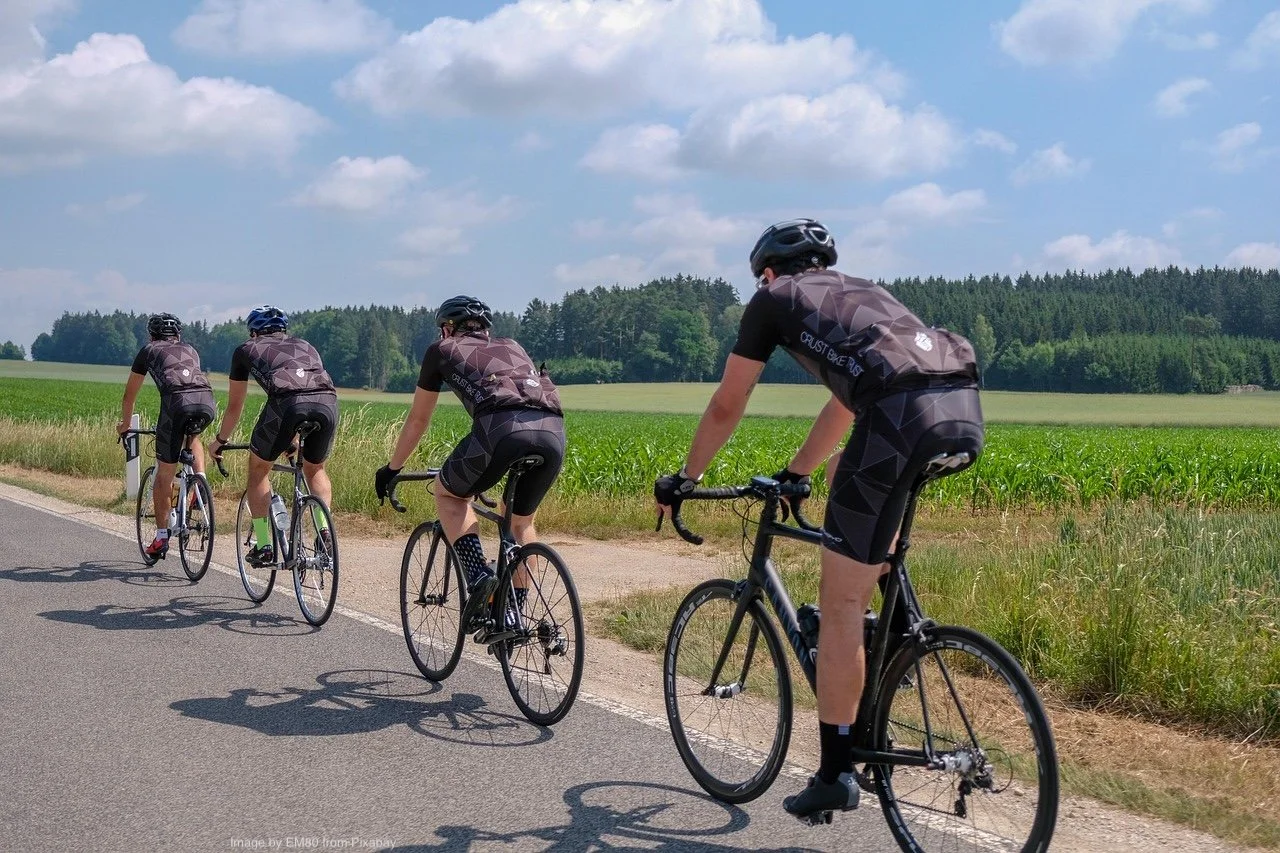
Many cyclists ride four to five times a week without a clear reason for why each ride is what it is.
Tuesday rides happen because they always have. Thursday sessions are whatever the group is doing that night. Weekend rides are long, because weekends are for long rides.
Its all fun and gets you out on the bike but often, there's usually no deliberate thought about how these sessions fit together to build meaningful cycling performance, other than just “cycling fitness”.
If you've been riding consistently for years but feel like you're not really improving anymore, this is often a big part of the reason why.
Why Riding Hard Without Structure Doesn't Build Performance Fitness
A common assumption in cycling is that if you ride often enough and hard enough, fitness will follow. And to a point that's true — especially in the earlier years when almost any stimulus produces improvement.
But the body adapts to training pretty quickly. Once it has adjusted to whatever you've been doing, it stops improving unless the stimulus changes or gets applied more deliberately. This is why riders who train the same way year after year eventually plateau, even though they're working hard.
And when you look at the research, this is proven: structured training consistently produces better outcomes than unstructured training [1]. And athletes found that roughly 70% of them hit performance plateaus or burn out because their training lacks structure [2]. It’s not because they aren't working hard. Its becasue they're working hard on the wrong things at the wrong times, without a plan tying it all together.
The Four Session Types That Make Up A Purposeful Week
Every ride in a well-structured week can be used to do a specific job. Once you understand what those jobs are, it becomes much easier to know why you're on the bike on any given day and what you're trying to get out of it.
For most masters cyclists there are four types of sessions that matter:
Genuinely easy rides.
These build your aerobic base and support your recovery. They need to be properly easy… and most cyclists ride them too hard which turns them into something less useful.
Hard sessions.
These are where the real fitness gains come from. Intervals, sustained efforts, structured intensity work — whatever the format, these are the sessions where you're deliberately challenging the body enough for it to adapt.
Long rides.
These build endurance and durability. They train you to sustain effort over time and prepare the body for the longer efforts you want to be able to do. You can’t replace time on the saddle with anything other than time on the saddle!
Recovery.
This is when the body actually absorbs the training you've done and consolidates it into fitness.
The mistake most masters cyclists make is not doing all four. Plenty have hard rides and moderately hard rides in their week. Very few have genuinely easy riding or proper recovery. The result is a week full of grey-zone efforts that feel productive but don't actually produce much adaptation.
Why This Matters?
If you’re over 40, your body responds differently to training stimulus. Recovery from a quality session takes longer for most masters cyclists, compared with cyclists in their 20s [3].
If you're doing hard sessions back to back — or somewhat hard rides multiple times regularly each week — the body doesn't get the chance to catch up before you're loading it again. Doing this won’t give you more fitness… It will build up fatigue that eventually catches up with you. And then you're forced to take a break whether you wanted to or not… thus restarting the whole process again.
The masters cyclists who keep improving into their 50s and beyond have usually worked out how to arrange their week properly. Their hard sessions are planned for days when their body is ready for them and their easy sessions are actually easy and doing the recovery job they're meant to do. That kind of weekly structure is what lets fitness and cycling performance build steadily over months and years and remaining in place for the long term.
How To Audit Your Own Training Week
Before you can improve the structure of your training you need to know what you're actually doing. Pull up the last four weeks of your rides and take an honest look.
How many of your rides were genuinely easy? Not "not that hard”, but properly easy, at a pace where you could hold a full conversation without a break. If the honest answer is low or none, that's a big clue.
How many were genuinely hard? Not moderately hard. Not somewhat challenging. But proper hard and with structure?
How many days did you leave between your hard sessions to give the body time to recover? If its less than 3 days, you’re at risk of building fatigue.
And are there sessions in your week that are just... there? Rides that happen because they've always happened, without a clear purpose?
Run through an audit like this for yourself. And be honest! It’s a great starting picture to what your training is actually doing versus what you’re maybe assuming it's doing.
As the old saying says… awareness is 70% of the solution!
Conclusion
Structuring your training week comes down to knowing what each session is for and arranging your week so your body gets the right stimulus followed by the right recovery to adapt. Start with an honest audit of your current week and identify which of the four session types you're doing well and which you're missing. Get this right consistently over time and your training stops being something that feels productive but is actually a performance plateau. What you want is to build fitness and performance year after year — which is what lets you keep improving well into your 50s and beyond.
And before you think it, I’ll say it. Performance can be maintained and plateaus and declines can be kept at bay at any age!
Frequently Asked Questions
How many sessions should I do in a week?
It depends on your current fitness, your goals and the time you have. For most masters cyclists four to five well-structured sessions per week is plenty to drive consistent improvement — and often more effective than trying to squeeze in six or seven unstructured rides.
What if I mostly ride with a group?
Group rides can absolutely be part of a purposeful week, but, and depending on the group you ride with, they ‘usually’ count as one of the hard or moderate sessions. The trick is making sure the rest of your week complements them rather than piling on more intensity.
How long does it take to feel the difference?
Most riders start to notice changes within three to four weeks of consistent structured training. Actual fitness improvements typically follow within six to eight weeks as the body responds to the properly balanced stimulus and recovery.
Do I need a coach to structure my training week properly?
Depends. On You, what you want and how you’re want to go about getting there. A great coach will help you to understand the principles and to apply them well to your specific physiology, your goals and your life circumstances.
References
1. Sanders, D., Heijboer, M., Akubat, I., Meijer, K., & Hesselink, M. K. (2023). Training periodization, intensity distribution, and volume in trained cyclists: A systematic review. International Journal of Sports Physiology and Performance, 18(2), 112–125. https://journals.humankinetics.com/view/journals/ijspp/18/2/article-p112.xml
2. Tamobyke Sport. (2025). Structured cycling training: Ultimate guide for 2025.https://tamobykesport.com/blogs/blog/structured-training-programs-unlock-your-cycling-potential
3. VanZyl Cycling. (2026). Masters cycling training: How to train smarter after 40.https://johannvanzylcycling.com/coaching-articles/masters-cycling-training-how-to-train-smarter-after-40