How To Stop Dreading Climbs And Start Using Them To Your Advantage
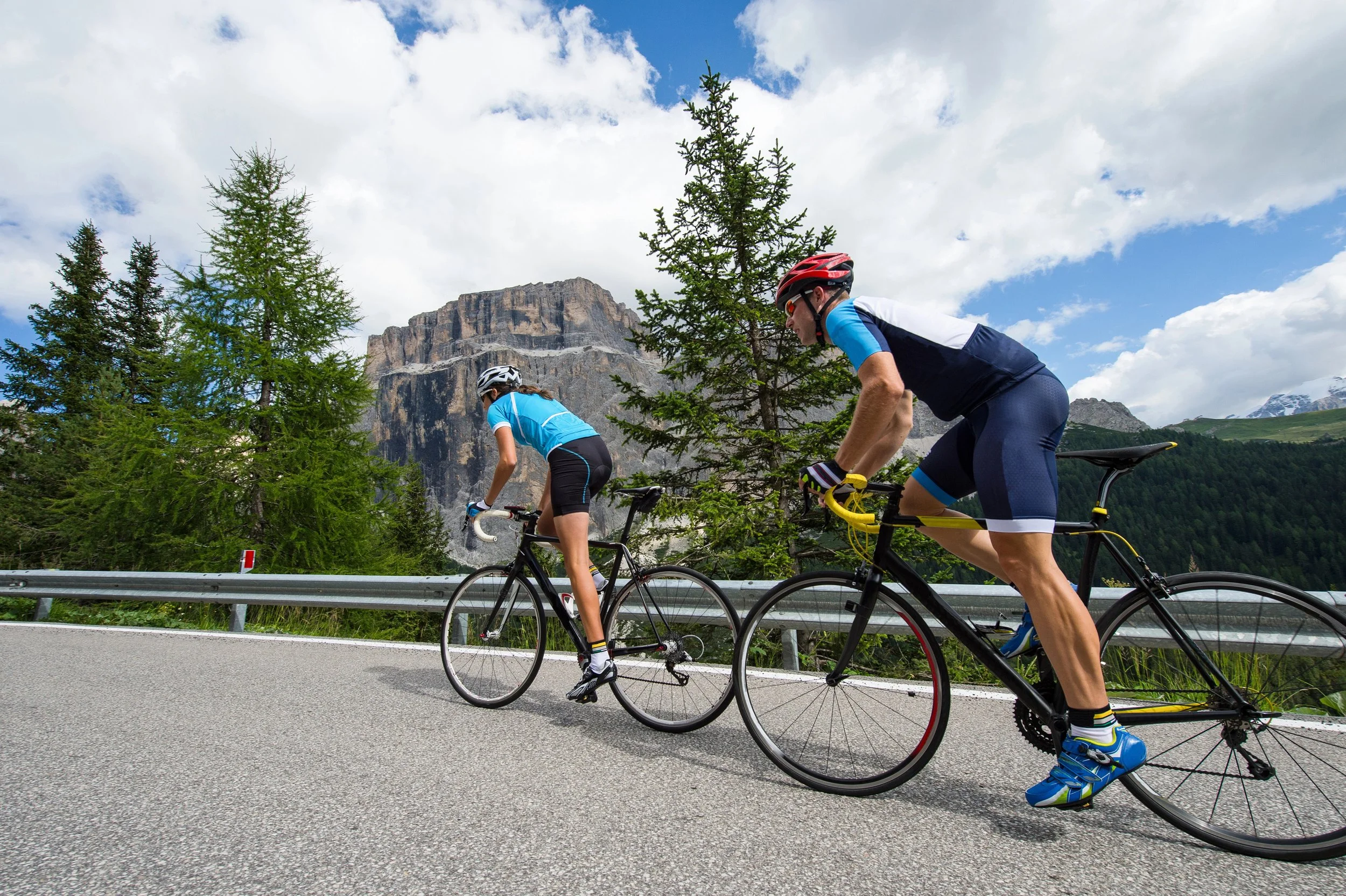
You see the hill coming. Your stomach tightens. You shift down a gear too early. You tell yourself this is going to hurt — and then it does.
Here's the uncomfortable truth: the dread is making the climb harder than it needs to be.
The way you approach a climb mentally doesn't just affect your mood. It directly affects your physiological response, your pacing decisions, and your performance. The good news is that this is trainable. And for masters cyclists, getting this right can close the gap on riders who are fitter on paper but mentally less prepared.
What's Actually Happening When You Dread a Climb
When you anticipate a threatening or painful experience, your body activates the stress response before the effort even begins.
Cortisol rises. Heart rate elevates. Breathing becomes shallower and faster. Muscles tense.
You arrive at the base already partially in fight-or-flight mode — burning energy before you've turned a pedal on the climb, limiting oxygen delivery, and setting a perceived effort ceiling your brain will try to enforce from the very first stroke.
Sport psychology research consistently shows that self-efficacy — your belief in your ability to execute a task — is one of the strongest predictors of performance in endurance activities (Llewellyn et al., 2008). Riders with genuine climbing confidence don't just feel better. They make smarter pacing decisions, maintain technique under fatigue, and recover from hard efforts mid-climb more effectively.
The dread isn't a rational assessment of your ability. It's a habit. And habits can be changed.
Mistake 1: Starting Too Hard
The single most common climbing error — and the one most directly caused by dread — is going out too hard at the base.
When anxiety is high, the impulse is to attack the climb and get it over with. Within two minutes, you're deep in the red. Your legs are burning. Your breathing is ragged. The remaining 80% of the climb feels impossible. And every subsequent time you approach that hill, the memory reinforces the dread.
Research on cycling pacing strategy confirms that even, controlled effort across a climb produces better outcomes than an aggressive start that bleeds into a blow-up (Roelands et al., 2013). The problem is that correct opening effort almost always feels too easy. Most riders don't trust that — and they pay for it later.
Knowing how to calibrate that opening effort for different climb lengths and gradients is a learnable skill. It's also one of the highest-leverage changes a masters cyclist can make.
Mistake 2: Thinking About the Top
Most riders spend the entire climb looking up the road toward the summit. The top seems impossibly far. The gradient looks worse from below. Every metre feels inadequate.
High-performing cyclists use a different attentional strategy — one that keeps focus narrow and present rather than fixed on the outcome. Research in endurance psychology consistently identifies this approach as both a performance enhancer and a reducer of perceived exertion during hard efforts (Brick et al., 2016).
The ability to redirect your attention during a climb — rather than letting it drift toward the gap, the gradient, or the summit — is something you can train deliberately. And once you have it, climbs feel fundamentally different.
Mistake 3: Negative Self-Talk at the First Sign of Pain
The moment it starts to hurt, many riders begin a running commentary: *This is too hard. My legs are gone. I'm not fit enough.*
This internal narrative doesn't describe the climb. It predicts failure. And the brain, receiving those signals, acts accordingly.
Reframing self-talk is one of the most evidence-supported psychological interventions in endurance sport. A 2014 study published in *Medicine & Science in Sports & Exercise* found that motivational self-talk significantly improved cycling time to exhaustion — without any change to physical training (Blanchfield et al., 2014). The intervention wasn't complicated. But it was deliberate and practised.
The specific way to redirect self-talk during a hard climb is something masters cyclists can learn and apply immediately — and the effect on perceived effort is often noticeable within a single ride.
How to Reframe Climbs Entirely
The most durable mental shift isn't a technique — it's a perspective change.
Climbs are the great equaliser. On a flat road, aerodynamics, equipment, and raw horsepower dominate. On a climb, the playing field narrows. Power-to-weight becomes the currency. Pacing intelligence matters more than speed. The rider who can sustain effort while managing discomfort — a trainable skill — has a genuine edge over riders who are stronger on paper but less prepared between the ears.
Masters cyclists who have built this mindset don't dread hills. They use them. A hill is where the ride gets decided. It's where the group gets sorted. And if you've done the preparation, it's where you find out exactly how good you are.
That reframe doesn't come from reading an article. It comes from going to the climb, repeatedly, with the right approach — and accumulating evidence that you can handle it.
The dread shrinks every time you come over the top intact.
Frequently Asked Questions
What if I'm genuinely not fit enough for the climb?
Fitness and mindset are separate variables that interact. Improving your mental approach to climbing won't substitute for training — but it ensures you extract the maximum from the fitness you have. Most riders consistently under-perform their actual fitness on climbs due to pacing errors and mental interference alone.
Is visualisation useful before a climb?
Yes, particularly for climbs you've ridden before. Mentally rehearsing a controlled, process-focused ascent primes your nervous system for that pattern of execution. The emphasis should be on the process — not the outcome.
What if I blow up mid-climb anyway?
Treat it as information, not failure. A blow-up almost always traces back to the opening effort. Each attempt teaches you something about calibration — if you're paying attention.
Does this apply to short, steep climbs as well as long ones?
The pacing principles shift for very short efforts. But the mental framework — managing the pre-climb response, redirecting attention, and controlling self-talk — applies to climbs of any duration or gradient.
References
Blanchfield, A. W., Hardy, J., De Morree, H. M., Staiano, W., & Marcora, S. M. (2014). Talking yourself out of exhaustion: The effects of self-talk on endurance performance. *Medicine & Science in Sports & Exercise, 46*(5), 998–1007. https://doi.org/10.1249/MSS.0000000000000184
Brick, N., MacIntyre, T., & Campbell, M. (2016). Thinking and action: A cognitive perspective on self-regulation during endurance performance. *Frontiers in Physiology, 7*, 159. https://doi.org/10.3389/fphys.2016.00159
Llewellyn, D. J., Sanchez, X., Asghar, A., & Jones, G. (2008). Self-efficacy, risk taking and performance in rock climbing. *Personality and Individual Differences, 45*(1), 75–81. https://doi.org/10.1016/j.paid.2008.03.001