Are You Completely Ignoring This Training Variable…? Costing You More Than A Hard Week on the Bike
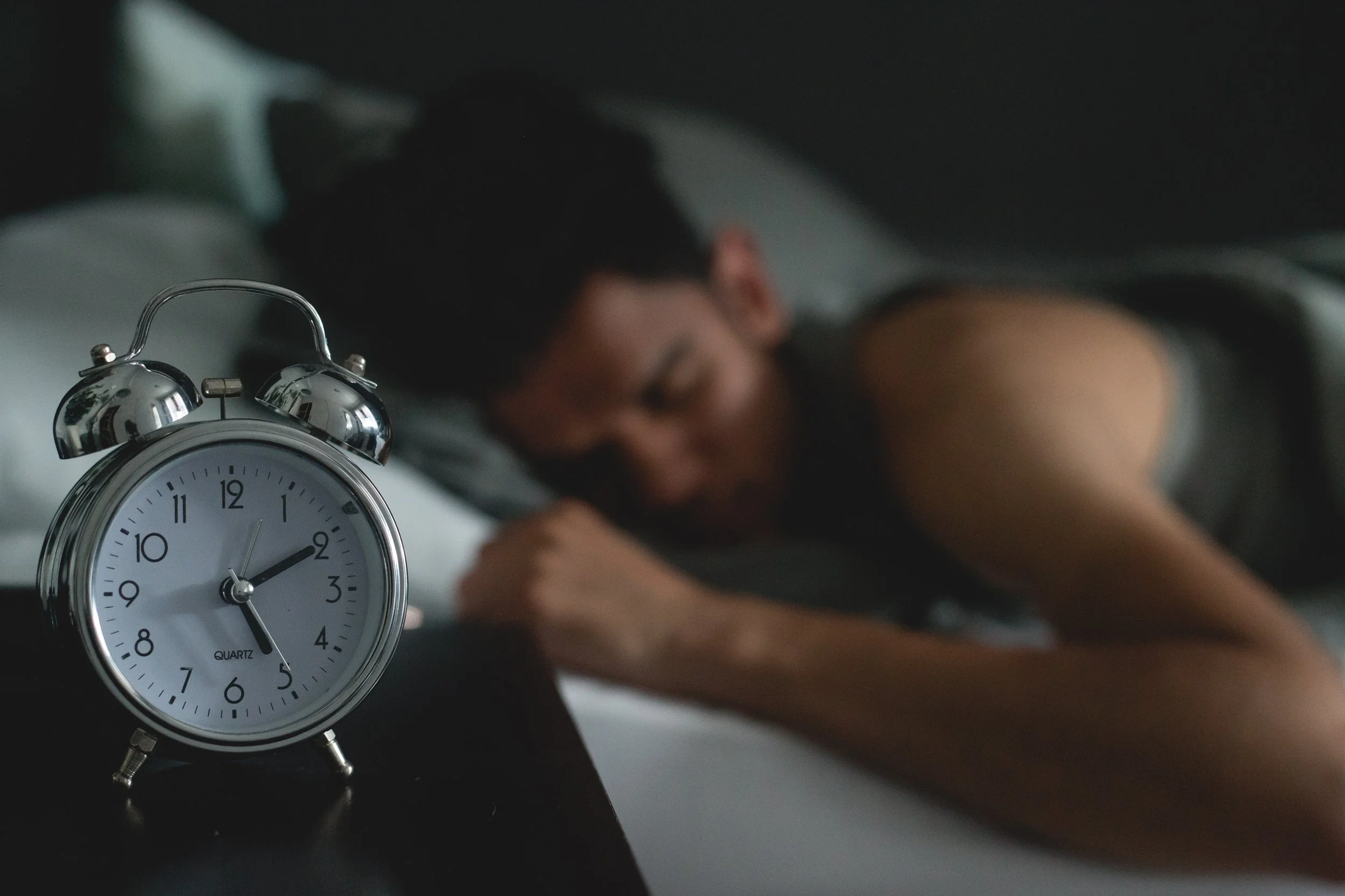
You're tracking your rides. Watching your nutrition. Maybe even monitoring your heart rate variability.
But if you're averaging six hours of sleep a night — which many busy professionals over 40 are — you're undermining every other investment you make in your cycling performance.
Sleep isn't a recovery bonus. It's where adaptation actually happens. Without enough of it, you're training hard and capturing only a fraction of the gains.
What Sleep Deprivation Actually Does to Your Cycling
The research on sleep and athletic performance is unambiguous: insufficient sleep degrades performance across virtually every measurable variable.
A comprehensive 2025 systematic review and meta-analysis found that sleep deprivation significantly impairs aerobic endurance, maximum force, speed, and skill control in athletes — while simultaneously increasing ratings of perceived exertion (RPE) for the same workload (Guo et al., 2025). In other words, you work harder to produce less.
For cyclists specifically, the physiological mechanism is well understood. Sleep restriction elevates heart rate, ventilation, and blood lactate at submaximal exercise intensities — the efforts that make up most of a group ride or training session (Mougin et al., 1991, cited in Vitale et al., 2025). Your threshold effort starts to feel like a hard effort. Your easy ride starts to feel like tempo. Every session is harder than it should be, and your brain has no way of knowing the difference between a hard week of training and a sleep-deprived one.
The same meta-analysis found that performance decrements from late-night sleep restriction are particularly pronounced for afternoon and evening exercise. Saturday group ride after a late Friday night? That's precisely the scenario where sleep deprivation hits hardest.
Why This Matters More After 40
Poor sleep affects all athletes. But masters cyclists carry additional physiological burdens that make sleep deficiency more damaging than it is in younger riders.
After 40, the hormonal environment shifts. Testosterone and growth hormone — both critical for muscle repair, adaptation, and recovery — naturally decline. Sleep is the primary window in which both are secreted. Research confirms that sleep restriction reduces anabolic hormone concentrations and elevates cortisol, the catabolic stress hormone associated with muscle breakdown and impaired recovery (Vitale et al., 2025).
For a 25-year-old rider, a poor night's sleep is a bad day. For a 50-year-old rider, chronic short sleep means training in a persistently elevated cortisol state — where the hormonal balance tilts toward breaking down rather than building up. The training stimulus is there. The physiological environment to respond to it is not.
There's also a direct effect on VO₂max. Research measuring sleep quality against cycling performance found that athletes who reported good sleep quality showed higher VO₂max values and lower maximum heart rate compared to those with poor sleep (cited in Vitale et al., 2025). What you're capable of aerobically is not fixed — it fluctuates with how well you're sleeping.
What "Enough Sleep" Actually Means for Masters Athletes
The commonly cited figure is 7–9 hours per night. For masters athletes in active training, the evidence supports the upper end of that range.
But duration alone is only half the picture. Sleep quality — specifically the proportion of deep slow-wave sleep and REM sleep in your nightly total — is equally important. These are the stages where muscle repair, growth hormone secretion, and cognitive consolidation occur. Certain common habits selectively disrupt these stages without reducing total sleep time. You can sleep 7.5 hours and still wake under-recovered.
The most reliable self-assessment is simple: if you consistently wake without an alarm feeling genuinely rested, your sleep is adequate. If you rely on an alarm and feel unrefreshed most mornings, that is a performance deficit you're carrying into every ride — one that no amount of training can overcome.
The Habits That Make the Biggest Difference
The interventions with the strongest evidence base for improving sleep quality are not supplements or gadgets. They are behavioural — adjustments to your daily routine that, done consistently, produce measurable changes in how deeply and effectively you sleep.
For masters cyclists specifically, there are five categories of change that matter most. Each one targets a different mechanism: your circadian rhythm, your hormonal sleep signalling, your core temperature regulation, your sleep architecture, and your training timing. None requires more than a few minutes of deliberate adjustment.
The riders who make genuine progress here are the ones who treat sleep habits with the same seriousness they apply to training load — because sleep isn't passive recovery. It's the environment where every hard ride you've ever done either becomes fitness or disappears.
Frequently Asked Questions
What if I can't sleep 8 hours due to work or family commitments?
Total duration matters, but quality within the time available matters equally. Improving from fragmented sleep to consolidated, higher-quality sleep — even at the same duration — produces measurable performance benefits. The right habits close that gap significantly.
Do naps help?
Yes. Research on sleep interventions in athletes finds that short naps of 20–30 minutes improve alertness, reaction time, and subjective recovery — particularly following a night of partial sleep deprivation (Lastella et al., 2022). A well-timed nap is a legitimate performance tool, not a sign of laziness.
How do I know if poor sleep is affecting my training?
The most reliable indicator is perceived exertion at a given intensity. If rides that typically feel manageable are consistently feeling harder without a corresponding increase in training load, sleep quality is one of the first variables to examine.
Is there a connection between hard training and poor sleep?
Yes, and it runs both ways. High training loads can temporarily disrupt sleep quality, particularly in the days following very hard efforts. This is another reason why managing training load intelligently — not just piling on volume — matters for masters cyclists. Excessive training stress combined with poor sleep creates a compounding recovery deficit that looks and feels exactly like overtraining.
References
Guo, J., Li, Y., Zhang, Y., Liu, T., Sun, Y., & Gao, G. (2025). Effects of sleep deprivation on sports performance and perceived exertion in athletes and non-athletes: A systematic review and meta-analysis. *Frontiers in Physiology, 16*, 1544286. https://doi.org/10.3389/fphys.2025.1544286
Lastella, M., Memon, A. R., & Vincent, G. E. (2022). The impact of sleep interventions on athletic performance: A systematic review. *Sports Medicine – Open, 8*, 79. https://doi.org/10.1186/s40798-023-00599-z
Vitale, J. A., Swain, D. P., & Weiss, E. P. (2025). Sleep and athletic performance: A multidimensional review of physiological and molecular mechanisms. *Journal of Clinical Medicine, 14*(21), 7606. https://doi.org/10.3390/jcm14217606