The Case For Riding Alone: Why Solo Training Makes You Stronger In Groups
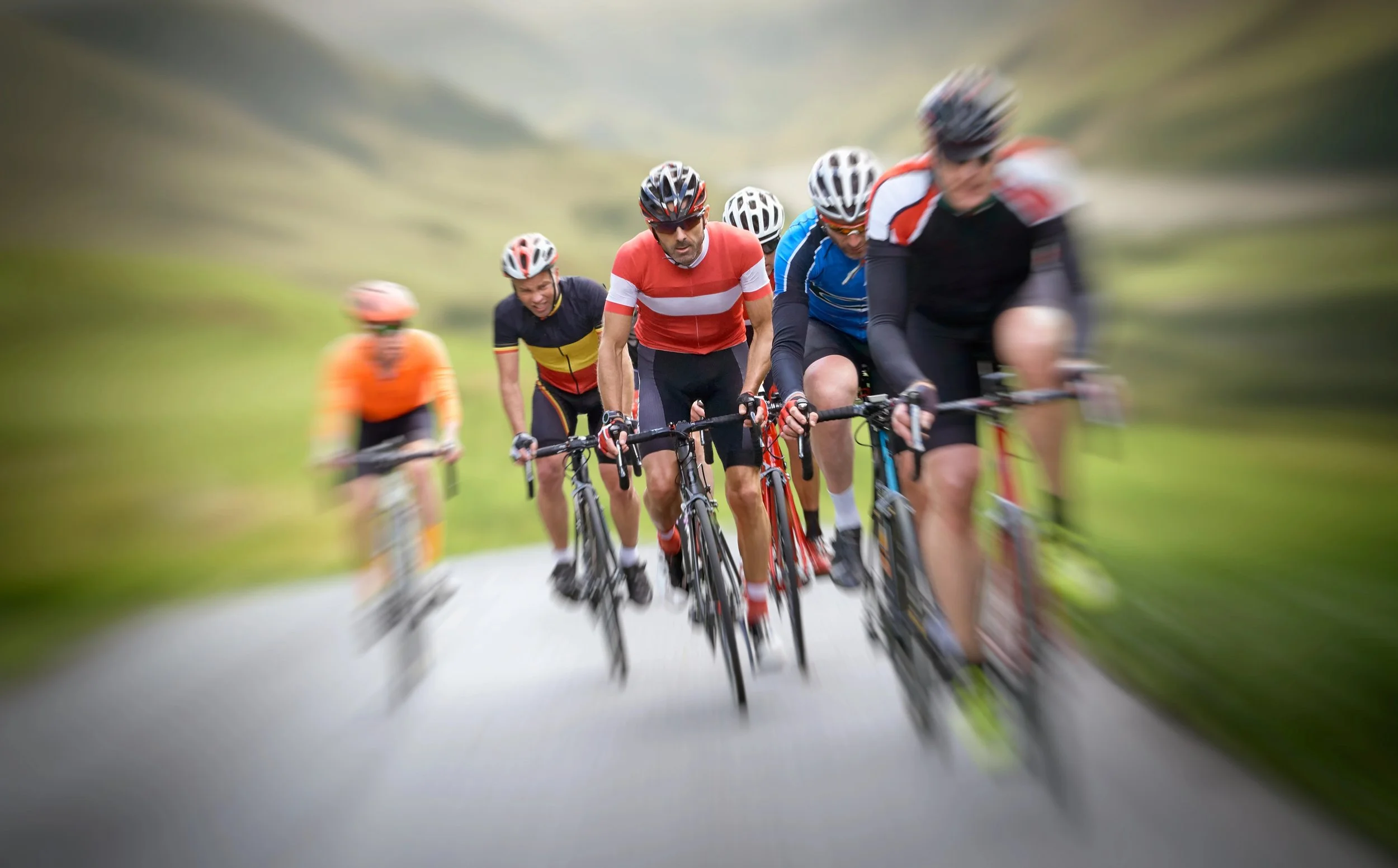
Most masters cyclists do almost all their riding with other people.
The group ride is the social anchor of the week. It's motivating, competitive, and — if you're honest — the main reason you get out of bed on a Saturday morning. None of that is wrong.
But if the group ride is where you do most of your training, there's something important you need to understand: you're not training — you're performing. And those are two very different things.
The Problem With Training in Groups (Most of the Time)
Group rides are notoriously poor at producing the right training stimulus at the right time.
This isn't a criticism of the rides themselves. It's a physiological reality. When you're riding with others, your effort is dictated by the group — not by what your body needs that day. The pace lifts when you don't need it to. It drops when you should be pushing. And the effort level you settle into for most of the ride sits in a zone that sounds productive but delivers surprisingly little return for the fatigue it costs.
Exercise physiologists have studied this in detail. The research on how elite endurance athletes actually distribute their training intensity reveals a pattern that most amateur cyclists — including most masters cyclists — consistently do the opposite of (Seiler, 2010). What group rides naturally produce is almost precisely what the science suggests you should be avoiding most of the time.
What You Can Only Do Alone
There are two training stimuli that deliver the greatest return for masters cyclists. Both require you to be in complete control of your own effort — which means neither can be reliably achieved in a group.
The first is at one end of the intensity spectrum. The second is at the other. Both are trainable. Both are specific. And both are systematically disrupted the moment another rider's wheel influences what you do.
In a group, you're never riding for the training effect. You're riding for the group. That distinction sounds simple, but its consequences accumulate across every week, every month, and every year you spend following someone else's pace instead of your own programme.
The masters cyclists who make consistent progress year after year have typically figured out that the rides where nobody is watching — no wheel to chase, no gap to close, no ego to manage — are often the ones that matter most.
What Groups Are Actually Good For
None of this means abandon the group ride. It means understand what it's for.
Group rides deliver something that solo training genuinely cannot: the experience of riding under social pressure, at variable and unpredictable intensities, with wheels to follow and surges to respond to. These are real skills — reading the group, positioning, recovering in a draft, producing hard efforts at the worst possible moment — and they only develop in group settings.
The rider who combines deliberate solo training with strategic group riding gets both. The rider who only group rides is constantly performing without ever building.
How to Think About the Balance
Most masters cyclists who are stuck — training consistently but not improving — are stuck because their training week looks the same every week. The group ride is the training. Everything else is either recovery or logistics.
The research points clearly toward a different structure. One where the group ride has a defined role — sharpening, social, skill-based — but is not the primary training stimulus. And where the real work happens in sessions that most riders would never consider doing, because they feel nothing like the Saturday morning hammerfest they've come to associate with "training hard."
The riders who make this shift describe a consistent experience: they show up to the group ride feeling better, lasting longer, and doing less work to stay at the front. Not because they rode more — but because they finally rode differently.
Frequently Asked Questions
Don't I need group rides to push myself harder than I would alone?
For certain types of intensity, yes — competitive pressure can extract efforts that are hard to replicate solo. But the majority of what builds fitness in masters cyclists doesn't require that pressure. It requires precision. And precision requires riding alone.
Won't riding alone hurt my motivation?
For many riders, the opposite is true. Solo rides with clear purpose have a clarity and satisfaction that reactive group riding rarely provides. Knowing what you're doing and why — and then executing it — is its own reward.
How much of my training should be solo versus group?
That depends on your current fitness, your goals, and how well your group ride aligns with what your training actually needs. The right balance looks different for every rider — but most masters cyclists who are plateauing benefit from adding more deliberate solo work, not more group miles.
Does this apply to indoor training as well?
Yes. Indoor riding is one of the most effective solo training environments available — complete intensity control, no traffic, no social pressure. Used deliberately, it's one of the highest-leverage training tools a time-crunched masters cyclist has access to.
References
Coons, J. M., Bowman, T. A., Arnett, S. W., Dobridge, J. L., & Farrar, R. P. (2011). Effects of high intensity training by heart rate or power in recreational cyclists. Journal of Human Sport and Exercise, 6(3), 563–573. https://pmc.ncbi.nlm.nih.gov/articles/PMC3737823/
Seiler, S. (2010). What is best practice for training intensity and duration distribution in endurance athletes? International Journal of Sports Physiology and Performance, 5(3), 276–291. https://doi.org/10.1123/ijspp.5.3.276