The Group Ride Survival Guide: How To Stay With Faster Riders Without Blowing Up
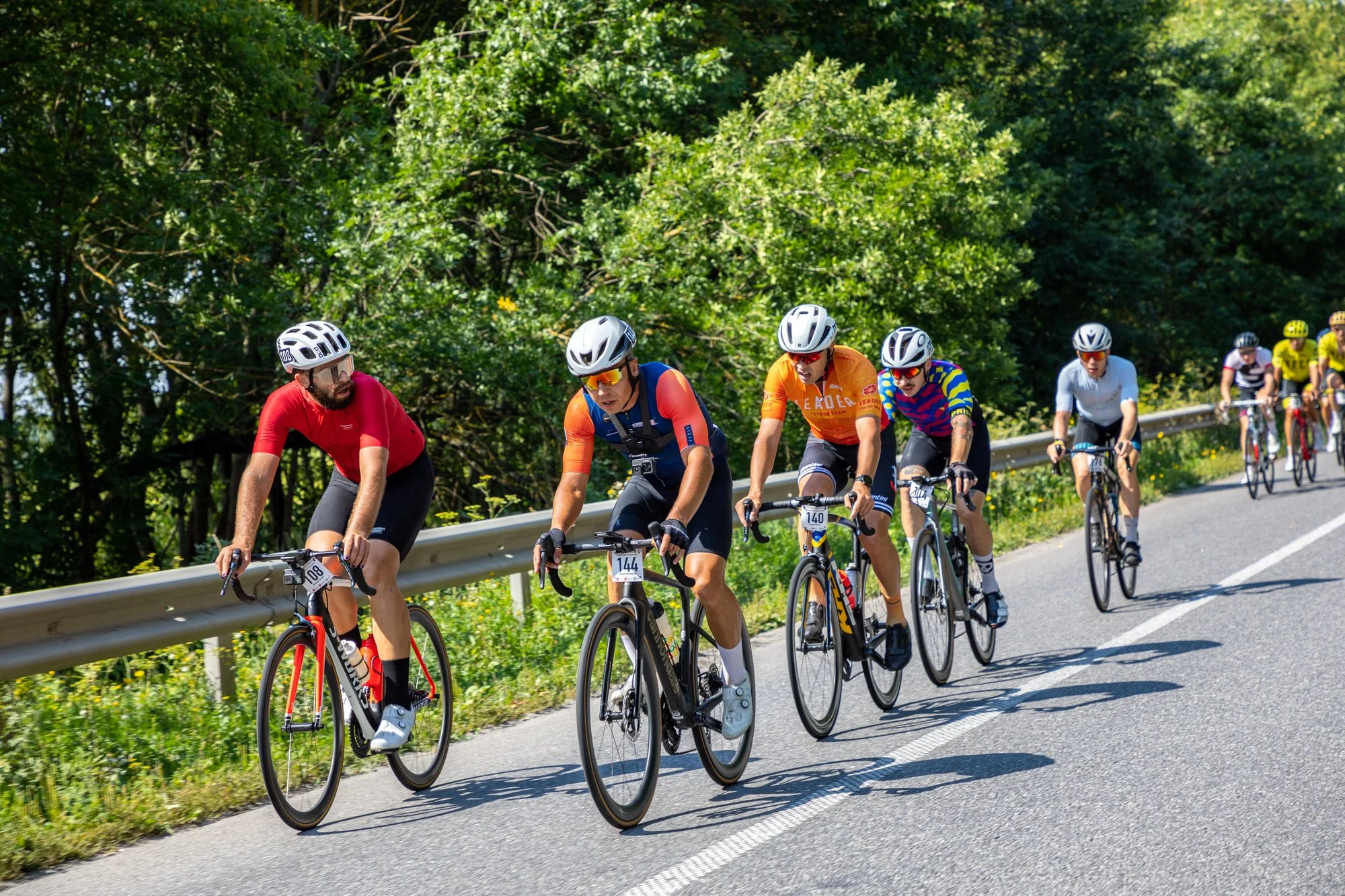
You roll up to the Saturday group ride with a knot in your stomach. The pace starts reasonable, but you know what's coming. Someone attacks on the first rise, the group surges, and suddenly you're fighting to hold the wheel in front of you.
Five kilometers in, your heart rate is redlined, your breathing is ragged, and you're already wondering how long you can hang on before the inevitable happens—watching the group disappear up the road while struggle on, alone.
Here's what frustrates most: you're fit enough to complete the ride distance easily. Yet in the group, you're getting dropped within the first thirty minutes. The difference isn't fitness—it's strategy. Faster riders aren't just stronger than you... They're also smarter about energy management, positioning, and reading group dynamics.
Learn these skills, and you can better stay with the groups that previously dropped you.
The Drafting Math That Changes Everything
Riding in a well-positioned draft reduces your energy expenditure by 20-40% compared to riding at the front or in the wind. This isn't marginal! Yet most riders waste this advantage through poor positioning and constant micro-accelerations to close gaps.
Research demonstrates that cyclists who maintain optimal drafting position can sustain significantly higher speeds for the same physiological cost compared to those riding exposed to wind resistance (1). Every second you spend out of the draft, you're burning matches you'll need later when the pace inevitably increases.
The key is staying close to the wheel ahead—within one bike length maximum. Larger gaps exponentially increase wind resistance and force you to work harder. They also create accordion effects where you're constantly braking and accelerating to maintain position, which depletes your energy reserves far faster than steady effort.
Positioning: Where You Sit Determines If You Survive
Most dropped riders make the same mistake: they're too far back in the group. By the time accelerations and attacks reach the rear, they're amplified significantly. The front accelerates by 5%, the middle by 10%, and the back by 20%. You're working harder just to maintain contact, let alone stay comfortable.
Your goal should be to position yourself in the front third of the group—close enough to the action so that you're not experiencing amplified accelerations, but not so far forward that you're exposed to wind or expected to do heavy pulling. This sweet spot lets you respond to pace changes with minimal energy expenditure while staying protected in the draft.
Watch where experienced riders position themselves. They're rarely at the very front (unless pulling through), and almost never at the back. They're hovering in that front third, moving smoothly with the group, anticipating changes before they happen. Copy this positioning, and your survival rate improves immediately.
Reading The Group: Anticipate Before Reacting
The riders who never blow up aren't just fit—they're also reading the terrain and group behavior to anticipate surges before they happen. A slight rise ahead? The pace will increase. Approaching a town sign? Someone will attack it. Wind shifts to tailwind? The group accelerates.
When you anticipate these surges, you can move up slightly in position before they happen, ensuring you're well-placed when the pace jumps. Riders who react after the surge has started are already behind, fighting to close gaps while others are settled back into sustainable effort.
Pay attention to body language too. When strong riders shift forward in the group or move to the outside, they're preparing to accelerate. When riders start looking around or sitting up slightly, the pace is about to ease. These visual cues give you 5-10 seconds of warning—enough to adjust position and avoid getting caught out.
The Corner Exit Strategy
Corners shatter groups more reliably than climbs, yet most riders don't understand why. The issue is speed differential through the turn. Riders at the front maintain momentum, while those mid-pack brake harder and lose more speed. Coming out of the corner, mid-pack riders must accelerate harder to close gaps—repeatedly.
Your strategy: maintain position in the front third before corners, carry as much speed through the turn as safely possible (body dynamics, bike handling under you, maintain a smooth line, minimal braking), and accelerating smoothly out (mild to moderate power surge) while the group is still reorganizing. This prevents you from getting gapped and requiring explosive efforts to reconnect.
From a biomechanical perspective, cornering efficiently requires proper weight distribution and body positioning. Weight the outside pedal and inside bar through the turn, lean the bike more than your body, and look through the exit. This technique carries more speed with less energy.
The Effort Management Reality
Staying with faster groups isn't about riding at your threshold for two hours. It's about managing efforts in peaks and valleys—going genuinely hard when necessary, recovering completely when possible. Most dropped riders make the mistake of riding at 80% effort constantly, which means they have nothing left when the group goes to 95%.
When the pace is steady and you're well-positioned in the draft, your effort should feel almost easy—65-70% of maximum. This is your recovery time, even while moving at high speed. You're banking energy for when you need it. When surges happen, respond with genuine effort to stay positioned, then immediately recover once the pace stabilizes.
Your breathing pattern indicates effort level better than heart rate. If you can't hold a brief conversation, you're working too hard during steady sections. Save that breathless effort for accelerations, attacks, and key terrain where the group naturally surges. Manage this rhythm properly, and you'll finish rides feeling strong rather than destroyed.
The Social Dynamics Element
Group rides have unwritten rules. Pulling through when appropriate, not overlapping wheels, pointing out hazards, and riding predictably all contribute to a good experience and being welcomed back. Riders who only sit on wheels without contributing eventually get cold-shouldered, while those who do their share earn respect and support.
You don't need to match the strongest riders' pulls. Contributing even 30-60 seconds at the front when fresh demonstrates willingness to work. As you get stronger, your pulls can lengthen. The key is showing effort and appreciation for the group's pace-making, not being dead weight that only takes from the draft.
Summary
Putting all of these things together can help you to survive the group ride speed and dynamics, not get dropped, do your turn to lead and pull and have an overall enjoyable experience.
Leave a comment below if you found something useless or have anything else to add for others to learn.
Enjoy the ride and climb!
FAQ
What if I get dropped despite good positioning?
Sometimes the group is genuinely too fast for your current fitness. Rather than suffering through and getting dropped, consider moving to a slightly slower group where you can practice these skills successfully. Building confidence and learning positioning in a sustainable group transfers when you're ready for faster paces.
How do I know which group ride is appropriate for my level?
Most group rides advertise average speeds or paces. Start with groups 2-3 km/h slower than your comfortable solo cruising speed. Group riding is always harder than solo riding at the same speed due to surges and positioning demands.
Should I try to attack or just survive?
Early in your group riding development, focus purely on survival and positioning. Once you're consistently finishing with the group and recovering well, you can start contributing harder efforts and occasional attacks. Walking before running matters here.
What's the best way to practice these skills without the pressure of fast groups?
Ride with friends at social pace and deliberately practice positioning, drafting distance, and cornering technique. The skills transfer to faster groups once you've mastered them in lower-pressure environments.
REFERENCES
1. Blocken, B., Defraeye, T., Koninckx, E., Carmeliet, J., & Hespel, P. (2013). CFD simulations of the aerodynamic drag of two drafting cyclists. Computers & Fluids, 71, 435-445.
2. Kyle, C.R. & Burke, E.R. (1984). Improving the racing bicycle. Mechanical Engineering, 106(9), 34-45.
3. Broker, J.P. (2003). Cycling power: Road and mountain. In High-Tech Cycling (pp. 147-174). Human Kinetics.