The Recovery Protocol That Lets You Train Harder at 45 Than You Did at 35
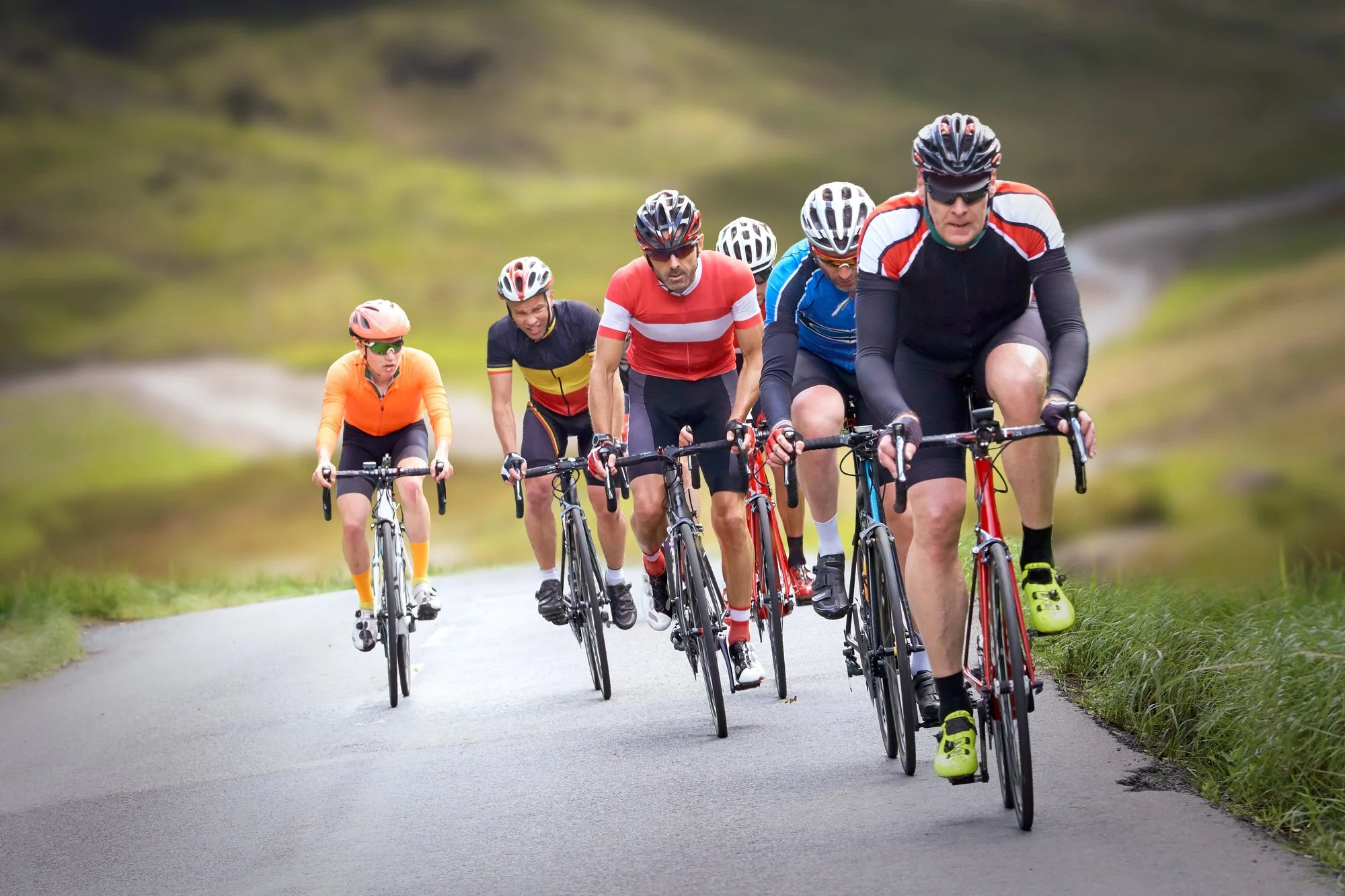
You just crushed Saturday's group ride—stayed with the pack on every climb, even attacked once or twice. But here's the problem: it's Monday, and your legs still feel trashed. The 24-hour recovery window you counted on in your thirties? That's ancient history now.
Most cyclists accept this as inevitable aging. Here's the truth: recovery changes after 40, but decline isn't mandatory if you understand what actually changed and how to work with it instead of against it.
The Recovery Reality Nobody Talks About
Research on masters cyclists reveals something fascinating. When well-trained riders in their mid-40s were compared to cyclists in their mid-20s performing identical three-day time trials, there was zero difference in actual performance recovery between the groups (1).
Zero.
Both groups maintained power output, lactate clearance, and sprint capacity equally well across all three days. But here's where it gets interesting: the older cyclists reported feeling significantly more fatigued, experienced greater perceived muscle soreness, and felt substantially less recovered—despite their bodies recovering at the exact same physiological rate as the younger riders (1).
Think about that for a moment. Your body is recovering fine. Your brain is lying to you about how recovered you actually are.
This perception gap creates a dangerous trap. You feel wrecked, so you skip Tuesday's ride. That missed session means less consistent training stress, which leads to fitness decline, which makes rides feel harder, which reinforces your belief that recovery is slowing. You've created a self-fulfilling prophecy based on false information.
What Actually Changed (And What Didn't)
After 40, you do need more time between truly maximal efforts. Research tracking well-trained masters and young cyclists through repeated high-intensity intervals found that while performance recovery was similar between age groups, masters athletes showed different hormonal and metabolic responses to training stress (2). The practical implication: 48-72 hours between genuinely maximal sessions allows for complete physiological recovery.
But here's what most cyclists get wrong: they apply this "need more recovery" principle to everything. Easy rides? Extra rest day. Threshold work? Better take it easy tomorrow. They end up training half as frequently based on a misunderstanding of what actually requires extended recovery.
The reality? You need the same recovery time as always between low and moderate-intensity rides. Your Zone 2 sessions don't require 48 hours off. Your tempo rides don't need two full rest days after. What needs more time is genuine VO2max work, all-out sprints, and rides where you're truly redlining effort.
The Protein Factor That Changes Everything
Here's where the practical science gets interesting. While your recovery capacity hasn't fundamentally changed, your nutritional requirements have shifted significantly.
A comprehensive review of protein requirements for masters athletes found that older endurance athletes need approximately 1.6-2.0 grams of protein per kilogram of body weight daily—significantly higher than younger athletes (3). For a 75kg cyclist, that's 120-150 grams of protein daily, not the 85-100 grams that worked fine at 30.
But timing matters as much as total amount. The same research shows that consuming 30-40 grams of protein per meal drives better muscle protein synthesis in masters athletes compared to the 20-25 grams sufficient for younger riders (3). Your body has become less efficient at pooling amino acid resources, so consistent supply throughout the day matters more than single large doses.
This isn't theoretical nutrition science. Studies on masters triathletes performing downhill running found that higher protein intake post-exercise (1.6 g/kg vs 1.2 g/kg) significantly reduced muscle damage markers and accelerated functional recovery (4). The cyclists who prioritized protein bounced back faster and trained more consistently than those who didn't.
The practical application? Within 30 minutes after hard rides, consume a recovery meal with at least 30 grams of protein plus carbohydrates. Then maintain elevated protein intake for 2-3 days following particularly demanding sessions. This sustained approach keeps protein synthesis elevated during the entire recovery window, not just the immediate post-ride period.
The Active Recovery Advantage
Complete rest feels intuitive when you're sore and fatigued. It's also counterproductive for actual recovery speed.
Active recovery—low-intensity movement that maintains blood flow without creating additional training stress—has strong support in the masters athlete literature. While specific percentages vary by study, the principle is consistent: light activity accelerates metabolic waste removal and maintains neuromuscular function better than complete passive rest (5).
The mechanism is straightforward: light activity increases oxygen delivery to fatigued muscles, facilitates metabolic waste removal, and maintains mobility without spiking stress hormones. You're essentially helping your body do what it already wants to do, just more efficiently.
The key is genuine low intensity. We're talking Zone 1 spinning at 60-70% of FTP, easy 30-45 minute rides where conversation is effortless. Not "recovery pace" that's actually tempo. Not "just spinning" that turns into a 200-watt effort because you felt good. Truly easy movement that serves recovery, not performance.
For cyclists dealing with any joint stiffness or impact sensitivity, aqua therapy provides similar benefits with zero joint loading. Swimming or water running maintains circulation and mobility while eliminating the repetitive stress that cycling still creates on knees and hips.
The Sleep Non-Negotiable
You can optimize nutrition perfectly and structure training brilliantly, but insufficient sleep destroys all of it. For masters cyclists, sleep quality becomes even more critical because growth hormone release—which drives much of your muscular recovery and adaptation—occurs primarily during deep sleep stages.
Age-related changes in sleep architecture mean you're getting less deep sleep naturally. If you're also shortchanging total sleep duration, you're compounding the problem. Sleep deprivation impairs muscle protein synthesis, elevates cortisol, and reduces glycogen restoration regardless of nutrition timing or training structure (3).
The practical target: 7-9 hours nightly, with emphasis on sleep consistency. Going to bed and waking at similar times daily matters more than most cyclists realize. Your circadian rhythm affects hormone release, protein synthesis timing, and recovery signaling pathways. Irregular sleep-wake cycles disrupt all of these even when total sleep duration seems adequate.
Sleep hygiene basics matter more at 45 than at 25. Cool, dark bedroom. No screens 60 minutes before bed. Consistent wind-down routine. These aren't optional nice-to-haves—they're performance fundamentals that directly impact your ability to absorb training stress and adapt.
The Training Distribution That Works
The biggest recovery mistake masters cyclists make? Training intensity distribution that puts them in no-man's-land constantly.
Everything becomes moderate intensity. Not easy enough to truly recover, not hard enough to drive meaningful adaptation. You're accumulating fatigue without capturing the training benefits that justify that fatigue.
The solution is polarized training: 80% of your training volume at genuinely low intensity, 20% at legitimately high intensity, with minimal time spent at moderate threshold efforts. This distribution maximizes training stimulus while managing recovery demands effectively—which matters more at 45 than 25 because your recovery budget is slightly smaller.
Research comparing different training intensity distributions in endurance athletes consistently shows that polarized approaches produce superior aerobic improvements while managing fatigue more effectively than threshold-heavy programs (5).
You're working smarter, not just harder.
FAQ
How do I know if I need more recovery or if I'm just being soft?
Track objective markers: resting heart rate (elevated by 5+ beats suggests incomplete recovery), heart rate variability (if you measure it), and most importantly, power output during intervals. If you hit target watts at target RPE, you're recovered regardless of how you feel subjectively. Perception lies after 40—trust the numbers (1).
Can I train as frequently at 50 as I did at 30?
Yes—but the intensity distribution must shift. You can ride just as often if you're truly keeping easy rides easy and spacing hard efforts 48-72 hours apart (2). Most masters cyclists train too hard on recovery days, not too frequently overall. Fix intensity discipline before adding rest days.
Does strength training slow cycling recovery?
Only if programmed poorly. Heavy strength training (2-3 sessions weekly) actually supports cycling recovery by improving neuromuscular efficiency and maintaining muscle mass. But schedule strength sessions after hard cycling days, not before them, and avoid leg-dominant lifting within 48 hours of key cycling sessions.
What about recovery supplements—do they actually work for older athletes?
Protein timing matters far more than supplements (3). That said, tart cherry juice shows genuine research support for reducing inflammation and muscle damage markers. Creatine monohydrate supports muscle protein synthesis and may benefit masters athletes specifically. Skip most other recovery supplements—they're marketing, not science.
References
1. Fell, J., Reaburn, P., & Harrison, G. J. (2008). Altered perception and report of fatigue and recovery in veteran athletes. Journal of Sports Medicine and Physical Fitness, 48(2), 272-277.
2. Poulios, A., Georgakouli, K., Draganidis, D., Papanikolaou, K., Tsimeas, P., Chatzinikolaou, A., Batrakoulis, A., Mohr, M., Jamurtas, A. Z., & Fatouros, I. G. (2022). Performance and recovery of well-trained younger and older athletes during different HIIT protocols. Frontiers in Physiology, 13, 816601.
3. Doering, T. M., Reaburn, P. R., Phillips, S. M., & Jenkins, D. G. (2016). Postexercise dietary protein strategies to maximize skeletal muscle repair and remodeling in masters endurance athletes: A review. International Journal of Sport Nutrition and Exercise Metabolism, 26(2), 168-178.
4. Doering, T. M., Reaburn, P. R., Borges, N. R., Cox, G. R., & Jenkins, D. G. (2017). The effect of higher than recommended protein feedings post-exercise on recovery following downhill running in masters triathletes. International Journal of Sport Nutrition and Exercise Metabolism, 27(1), 76-82.
5. Stöggl, T. L., & Sperlich, B. (2015). The training intensity distribution among well-trained and elite endurance athletes. Frontiers in Physiology, 6, 295.