The Breathing Technique That Stops You From Blowing Up on Steep Climbs
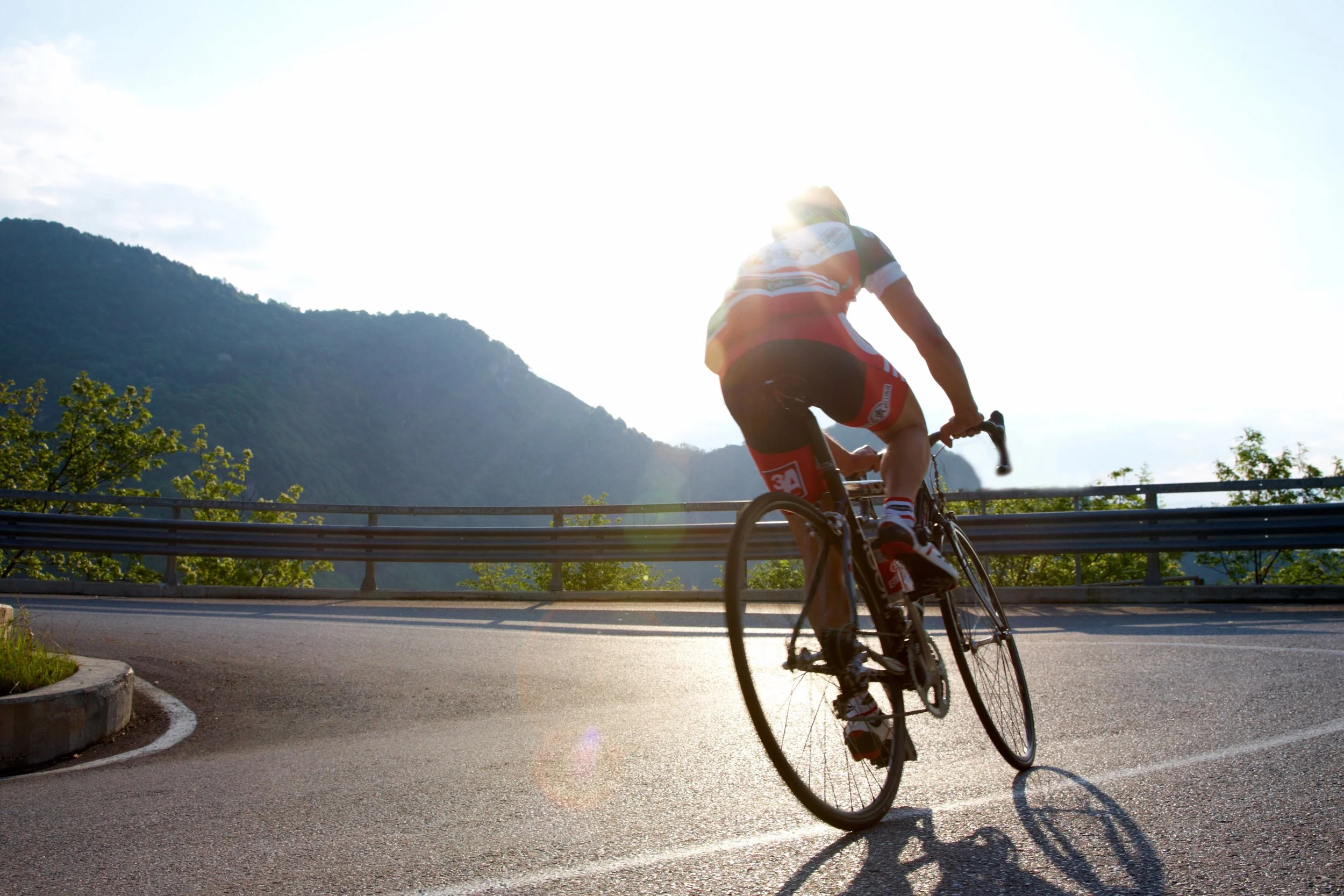
Two minutes into a 7% gradient and you're already gasping for air. Your legs still have power, but your breathing has gone completely haywire—short, shallow, desperate. You know you're going to crack before the top, not because your legs gave out, but because you literally can't catch your breath.
Here's what's actually happening: you're breathing incorrectly for the demands of climbing, and it's destroying your performance before your fitness even becomes the limiting factor.
Why Most Cyclists Breathe Wrong Under Load
When the road tilts up and power demands spike, your natural stress response kicks in. Heart rate jumps, breathing accelerates, and most cyclists immediately shift to rapid, shallow chest breathing. This feels instinctive when you're suffering—but it's precisely the wrong response.
Shallow breathing uses only the upper portion of your lungs, leaving the lower lobes—where the majority of oxygen exchange occurs—largely unused. You're taking 40 breaths per minute but only processing a fraction of the oxygen you could be with fewer, deeper breaths. The result? You feel like you're suffocating despite breathing frantically.
Research on breathing patterns during cycling shows that trained athletes naturally develop breathing rhythms that efficiently manage carbon dioxide removal at specific effort levels (1). The better you regulate CO2 through controlled breathing, the longer you delay fatigue and the perception of breathlessness (1). Your breathing pattern isn't just about getting oxygen in—it's about managing metabolic byproducts that make you feel like you're drowning.
When you panic-breathe on climbs, you're hyperventilating. This doesn't increase oxygen delivery—it disrupts the CO2 balance in your blood, which actually makes it harder for oxygen to release from hemoglobin to your working muscles. You're breathing more but delivering less usable oxygen where it matters.
The Diaphragmatic Difference
Elite climbers don't breathe with their chest—they breathe with their diaphragm. This isn't just semantics; it's a fundamental mechanical difference that determines how much oxygen you can process per breath.
Diaphragmatic breathing involves contracting your diaphragm muscle, which expands your belly and allows your lungs to fill completely from bottom to top. This maximizes oxygen intake per breath while decreasing respiratory rate, creating a calmer, more sustainable breathing pattern even at high intensity.
The practical difference is enormous. A cyclist chest-breathing might take 40 shallow breaths per minute during a hard climb, processing perhaps 2 liters of air per minute. A cyclist using proper diaphragmatic breathing might take 25 deep breaths per minute but process 3+ liters of air per minute. Same effort, 50% more oxygen, dramatically less sensation of suffocation.
The Pre-Ride Breathing Protocol
Here's where recent research gets really interesting. Specific breathing exercises performed before rides can actually improve your oxygen processing capacity during the ride itself.
Studies on endurance athletes performing deep breathing exercises with breath holds before incremental cycling tests showed remarkable results: oxygen consumption increased 2.4-4.9% during subsequent exercise stages, and perceived exertion decreased significantly (2). Most striking? All participants completed the hardest test stage after breathing exercises, but five participants failed to complete it without the breathing preparation (2).
The mechanism involves temporarily increasing CO2 levels through breath holds, which triggers a sympathetic response that enhances blood flow to working muscles and improves ventilation efficiency (2). You're essentially "priming" your respiratory system to handle the demands you're about to place on it.
The protocol is straightforward: 5-10 minutes before your ride or climb, perform deep diaphragmatic breathing with progressive breath holds. Inhale deeply for 4 counts, hold for 4 counts, exhale fully for 6 counts. Repeat 10-15 times. Your body adapts its breathing efficiency for the work ahead.
This isn't about hyperventilation or breathing manipulation during the ride—it's specific preparation that measurably improves how your respiratory system performs once you're riding.
The Rhythm That Matches Your Cadence
During actual climbing, your breathing naturally wants to synchronize with your pedal stroke. Fighting this is counterproductive. Elite cyclists develop breathing patterns that align with their cadence, creating rhythmic efficiency that reduces the mental load of managing breath while riding (1).
For moderate climbs (5-7%), many strong climbers use a 2:2 pattern—two pedal strokes per inhale, two per exhale. As gradients steepen or intensity increases, this might shift to 2:1 (two strokes inhale, one exhale) or even 1:1 during maximum efforts.
The specific ratio matters less than establishing a rhythm and sticking to it. When your breathing becomes erratic and disconnected from your movement, that's when panic breathing takes over. Conscious rhythm maintenance—even when it feels difficult—keeps you out of that destructive pattern.
Here's the key: establish your breathing rhythm before the climb gets truly hard. If you wait until you're already suffering to think about breathing technique, you've waited too long. As soon as the gradient tilts up, consciously lock into your breathing pattern and hold it as intensity builds.
The Out-of-Saddle Breathing Shift
When you stand to climb, everything about your breathing changes. Your diaphragm has less room to expand because your hip angle closes and your core muscles engage differently. Many cyclists immediately lose their breathing rhythm when standing, which is exactly when you need it most.
The adaptation required: consciously maintain belly breathing even when standing. This feels awkward initially because your instinct is to lock your core tight when standing. But locking your core restricts diaphragmatic movement, forcing you back into shallow chest breathing.
The solution is learning to maintain core stability while allowing your diaphragm to move freely. Think "stable pelvis, mobile diaphragm." Your core controls your bike, but your breathing muscles operate independently. This dissociation requires practice—most cyclists have never consciously thought about breathing while standing to climb.
Practice this during training rides: stand for 30-60 seconds on moderate gradients and focus exclusively on maintaining deep belly breathing. Feel your stomach expand with each inhale even as you're generating power through your legs and stabilizing with your core. This neuromuscular coordination becomes automatic with repetition.
The Recovery Breath Between Efforts
Group rides and gran fondos feature repeated climbing efforts separated by flat or downhill sections. How you breathe during these "recovery" sections determines whether you start the next climb fresh or still gasping from the last one.
Most cyclists continue breathing hard for the first minute or two after cresting a climb, which is natural—your body is clearing metabolic byproducts. But then they fail to actively reset their breathing to a calm, controlled pattern before the next effort begins.
The practice: as soon as intensity drops after a climb, consciously slow and deepen your breathing. Four-count inhale, six-count exhale, repeated deliberately for 60-90 seconds. This activates your parasympathetic nervous system, lowers heart rate faster, and prepares you physiologically for the next effort.
Controlled breathing patterns between efforts improve subsequent performance by ensuring more complete recovery in shorter time periods. You're not just catching your breath—you're actively resetting your entire cardiovascular system.
The Mental Component
Breathing technique isn't just mechanical—it's psychological. When you're suffering on a climb and fighting for breath, panic sets in. That panic makes everything worse. Shallow breathing feeds anxiety, which increases perceived effort, which makes you breathe worse, creating a vicious spiral.
Breaking this cycle requires conscious breathing discipline exactly when it's hardest to maintain. The moment you notice your breathing going chaotic, that's your cue to forcefully reset it. Deep inhale. Full exhale. Establish rhythm. Hold the pattern.
This mental discipline separates cyclists who climb strongly from those who crack. Your legs might be burning identically, but the rider maintaining breathing control continues riding smoothly while the panic-breather implodes. It's not superior fitness—it's superior self-regulation under stress.
FAQ
Can breathing technique really make that much difference compared to just getting fitter? Yes—research shows proper pre-ride breathing exercises can improve oxygen consumption by 2.4-4.9% without any change in fitness level (2). That's the difference between getting dropped and staying with the group on hard climbs. Fitness and technique work together; optimizing both beats developing only one.
How long does it take to change ingrained breathing patterns? Most cyclists notice improvement within 2-3 rides of conscious practice. Full automation of new patterns takes 4-6 weeks of deliberate attention during every ride. Initially it requires constant mental focus, but it becomes unconscious habit with repetition—just like pedaling technique did when you first started cycling.
Should I practice breathing differently during easy rides or save it for hard efforts? Practice breathing technique during easy rides when you can focus on mechanics without the distraction of suffering. This builds the neural pathways that make proper breathing automatic when climbs get hard. If you only think about breathing during suffering, you'll never master it.
Does breathing through your nose versus mouth matter for climbing? At climbing intensities, you need the airflow volume that only mouth breathing provides. Nose breathing works fine for Zone 1-2 riding but becomes limiting above threshold. For hard climbs, breathe however gets the most air moving—typically open mouth. The breathing pattern and depth matter far more than the entry route.
References
Sellars, A., & Thornham, J. (2025). Breathe smarter, ride faster: Unlocking performance through cadence and respiration. VO2 Master Performance Insights. Retrieved from https://vo2master.com/blog/cadence-breathing-endurance-performance/
Bahenský, P., Marko, D., Grosicki, G. J., & Malátová, R. (2020). Warm-up breathing exercises accelerate VO2 kinetics and reduce subjective strain during incremental cycling exercise in adolescents. Journal of Physical Education and Sport, 20(6), 3350-3360.