Your Surge Reserve: Is This The Missing Piece For Your Bunch Rides?
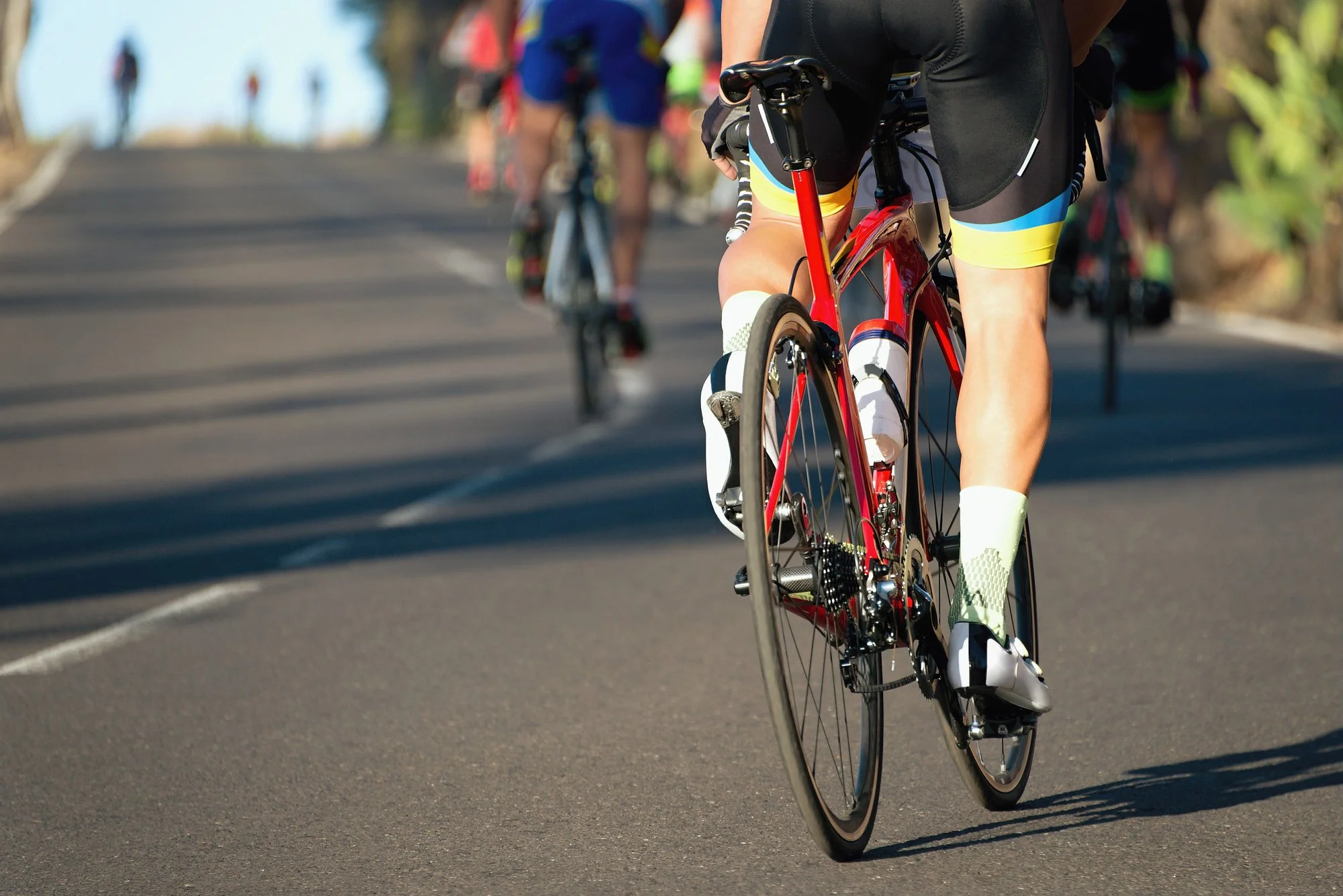
I want to talk about your ability to match, and keep matching surges, deep into rides.
Many cyclists know this and have experienced it… 50 or 60 or 70 km into a group ride, the pace lifts, again, over a rise. Up to that point, you've been able to match the pace rises and keep with the group but now, at this point into the ride, the wheel in front just keeps drifting away on a surge and its getting harder and harder to regain it after each surge, requiring more and more tiring efforts. Does that sound familiar?
Your endurance is fine, because you can handle the 50, 60 or 70km distance. So what's going on?
What's missing is your surge capacity... the so called matches you have available to burn, and this is typically the fitness that drops significantly more as you get older... It also tends not to be trained as much or as diligently.
What Is Your Surge Reserve?
It's your anaerobic capacity, the hard work you can do above your threshold before your body forces you to ease off. It powers efforts of roughly 30 seconds to 2 minutes… attacks, short sharp climbs, closing a gap, things like that.
Think of it like a battery. Every surge drains some of it and it only partly recharges before the next one, so once it's flat you can't respond, no matter how good your aerobic fitness is.
Another way to think of it like a pack of matches. You start off a ride with a set number... the younger or better trained you are, the more matches there are in the box. Each time you expend effort to match a surge, you burn a match. If, for example, you only have 8 matches... well, you can see what will happen.
Why Does This Matter On Your Bunch Rides?
Because bunch rides aren't steady! They're a string of surges, accelerations out of corners and short climbs, repeated for two or three or more hours. And the faster the average group ride is, the more demanding those surges are.
Every surge you cover at your limit takes you deeper into the red. By the last 20 km, it's the rider with charge left in the battery or matches left in the pack who is able to finish strong, not the one with the biggest engine. (Although having a big engine is hugely important and helpful here too... and how that integrates with your surge capacity is a topic for another time).
What Happens To Surge Capacity With Age?
In a study of 173 trained masters cyclists aged 35–64, anaerobic capacity was around 8% lower with each decade of age, while aerobic power showed no significant change [1]. The engine for steady riding was preserved well (when trained) but the surge reserve wasn't!
In another study of masters athletes (athletes from both endurance and power sports, not just cyclists), found both systems declined at a similar rate, roughly 7–14% per decade [2].
Although results from research can be slightly varied at times, from my physiotherapist perspective, we know that with age the body loses both muscle mass and, more readily, the fast-twitch (type II) fibres that power hard efforts [3]… So surge efforts suffer more than long steady riding (as this doesn't demand much of those muscle fibre types).
The Good News?
Surge power responds to training AT ANY AGE. In male masters athletes averaging 60 years old, sprint sessions over a six week period lifted peak power by about 8% [4].
And if you couple those sprint sessions with strength training, you can help hold onto fast-twitch fibres too [3].
And I'll repeat myself... this works AT ANY AGE. Even at 90... as I've seen in many patients in my clinical practice.
So, Where Does It Fit For You?
Not in extra hours. You will have to make time for it and likely reshuffle some training and riding around it, but it doesn't mean you need to go harder for longer... even though that is the result you want on the bunch ride.
This is great news!
Time spent going "hard" should be short but demanding, and recovery respected.
Ask yourself these questions in light of your starting point, goals and current capacity:
- How long should each hard effort be, and how many?
- How often in a week?
- How do you balance it with your other riding?
- What does my recovery look like?
And learning to read your own recovery is part of the skill... some men in their early 60s need around five days to recover peak power after a single hard interval session, compared with three days for men in their early 20s [5]. So, again, recovery needs to be respected.
The Wrap-Up
Picture finishing your next 50, 60 or 70 km bunch ride still with the group, covering the surges without burning through all your matches and having to live in the red zone for the last part of the ride. Trust me, that feeling of finishing strong and not spent is a great feeling!
That's where a well-trained surge reserve can help. Train it with purpose, give the body time to recover, and enjoy riding strong right to the end!
FAQ
Is this only for racers?
No… if you ride in a bunch, you're dipping into it every ride.
Will it hurt my endurance?
Not when it stays a small part of your week, short but demanding, and recovery is respected.
Am I too old to start training this now?
No… surge power responds to training AT ANY AGE. Where you’re starting from matters more than your age… so start sensibly, respect recovery, and build from there.
Can’t I just get this from my weekly bunch ride?
Partly, but not well. The surges on a bunch ride are random… you don’t choose how long they are, how many there are, or how much recovery you get between them. So you’re more likely to just get tired than to train your surge reserve on purpose.
References
1. Aging has greater impact on anaerobic versus aerobic power in trained masters athletes. J Sports Sci. 2013;31(1):97–103. doi:10.1080/02640414.2012.721561
2. Bagley L, McPhee JS, Ganse B, Müller K, Korhonen MT, Rittweger J, Degens H. Similar relative decline in aerobic and anaerobic power with age in endurance and power master athletes of both sexes. Scand J Med Sci Sports. 2019;29(6):791–799. doi:10.1111/sms.13404
3. Reaburn P, Dascombe B. Anaerobic performance in masters athletes. Eur Rev Aging Phys Act. 2009;6(1):39–53. doi:10.1007/s11556-008-0041-6
4. Herbert P, Hayes LD, Sculthorpe NF, Grace FM. HIIT produces increases in muscle power and free testosterone in male masters athletes. Endocr Connect. 2017;6(7):430–436.
5. Herbert P, Grace FM, Sculthorpe NF. Exercising caution: prolonged recovery from a single session of high-intensity interval training in older men. J Am Geriatr Soc. 2015;63(4):817–818. doi:10.1111/jgs.13365