Flat Road Speed: Building The Sustained Power To Hold 30+ km/h Without Suffering
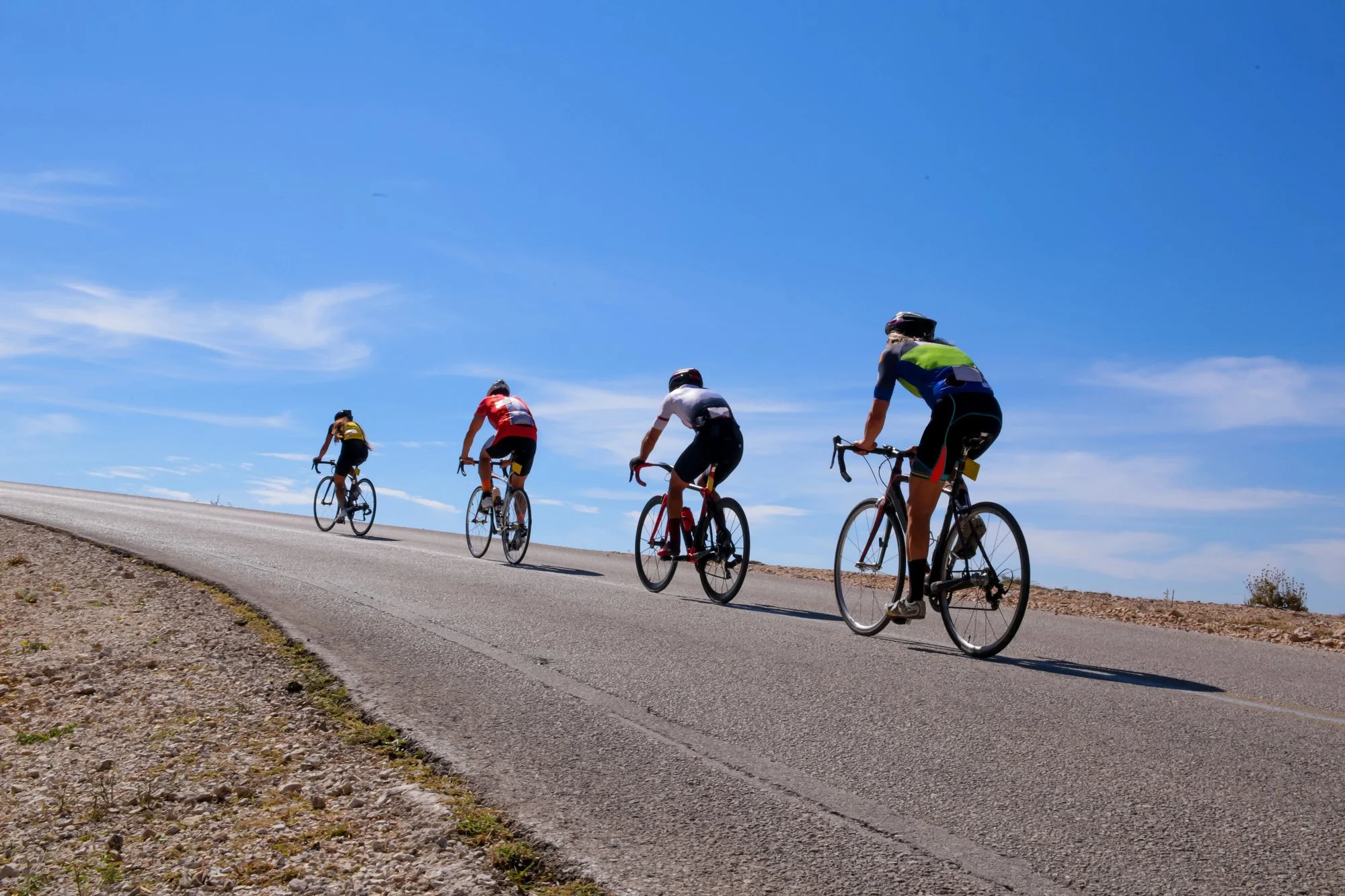
The Saturday group ride rolls out. First twenty kilometers are flat roads heading toward the hills. You're already struggling to hold 32 km/h, your legs burning on flat ground, and you haven't even reached the climbs yet. By the time you hit the first ascent, you're already depleted.
Meanwhile, others are chatting casually at this pace, fresh and ready to climb.
Climbing strength means nothing if you're cooked before the gradient appears. Flat speed is a limiter most climbers ignore, and might be costing you more than you realize.
Why Flat Speed Differs From Climbing Power
Climbing performance is determined primarily by power-to-weight ratio—your watts divided by kilograms. Gravity is the enemy, and being lighter with decent power wins. Flat speed operates under completely different physics. Air resistance becomes the dominant force you're fighting, consuming roughly 80% of your effort at 30 km/h.
This means absolute power matters more than power-to-weight ratio on flats. A heavier rider producing 250 watts will ride faster on flat ground than a lighter rider producing 220 watts, even though the lighter rider might crush them on climbs. Your aerodynamic position becomes crucial—a 10% reduction in frontal area can save 5-7% power output at speed.
Sustained output determines flat performance more than peak power. Holding 200 watts for two hours matters infinitely more than hitting 300 watts for five minutes. This requires developing a different energy system than climbing-specific training typically emphasizes.
The Aerobic Threshold Zone
Your aerobic threshold—the highest intensity you can sustain while primarily using aerobic metabolism—predicts flat speed endurance better than FTP. This zone typically sits around 75-85% of your functional threshold power. It's sustainable for 2-4 hours when properly trained, feels challenging but not crushing, and allows conversation albeit with effort.
Training at this intensity produces specific adaptations: enhanced mitochondrial density in muscle cells, improved fat oxidation capacity, and increased sustainable power output. Research demonstrates that threshold training in this zone provides the most time-efficient stimulus for sustained flat speed development (1).
Most cyclists either ride too easy to stimulate adaptation or too hard to sustain long enough for meaningful training effect. Finding and training at your aerobic threshold—not below it, not above it—is the key to building flat speed.
Position Makes Power Free
Every watt you save through improved position is a watt you don't need to produce from your legs. Riding in the drops versus on the hoods saves 15-20 watts at 30 km/h. Narrowing your elbow position saves another 5-10 watts. Achieving a flatter back with your head lower reduces frontal area significantly—potentially another 10-15 watts saved.
The cumulative effect is substantial. A 30-watt positional improvement means 30 watts less you need to generate. For most cyclists, gaining 30 watts through fitness takes months of focused training. Gaining 30 watts through position optimization can happen in weeks of deliberate practice.
From a physiological perspective, holding aerodynamic positions requires core strength and hip flexibility. Your ability to maintain low, narrow positioning for extended periods often limits your aerodynamic gains more than the position itself. This is where targeted off-bike work creates immediate on-bike benefits.
The Training Approach
Building flat speed requires focused sessions targeting your aerobic threshold. Tempo intervals—sustained efforts in that 75-85% FTP range—form the foundation. These need to be long enough to stress the relevant energy systems but not so long you can't recover between sessions.
Sweet spot training—riding at 88-93% of threshold—provides another powerful stimulus. You're working hard enough to drive adaptation but not so hard that recovery cost prevents consistent training. The specific structure, duration, and progression of these sessions determines whether you build sustainable flat speed or just accumulate fatigue.
Indoor training often works better for flat-specific development. Terrain interruptions outdoors—hills, stops, traffic—disrupt the sustained efforts that build threshold endurance. On a trainer, you can maintain precise power targets without external interference.
Group Riding Efficiency
The fastest way to improve flat speed in group settings isn't building more power—it's learning to use less power through intelligent positioning and drafting. Sitting in a well-positioned draft saves 20-40% energy at speeds above 30 km/h. That's not marginal—it's the difference between finishing strong and blowing up.
Most dropped riders aren't dropped because the group is too fast. They're dropped because they're riding in the wind, too far back experiencing accordion effects, or taking pulls that are too long for their current fitness. Smart positioning and tactical awareness often matter more than raw fitness in group scenarios.
The Mental Shift
Flat speed demands different psychology than climbing. Hills provide visible progress, summits offer satisfaction, descents give rewards. Flats offer none of that—just sustained discomfort for extended periods with no dramatic payoff. Many climbers struggle not from fitness limitations but from mental resistance to this type of suffering.
Learning to settle into uncomfortable-but-sustainable rhythm for long durations is a skill separate from physiological capacity. It requires accepting steady discomfort without the psychological crutch of "just get to the top." This mental adaptation often develops more slowly than physical adaptation.
So there you have it…
5 strategies for improving your flat road speed. Pick one to start and build from there!
Let me know in the comments below what you chose and how you went?
FAQ
I'm strong on hills but weak on flats—is this normal?
Yes, especially for lighter riders with high power-to-weight ratios. Absolute power matters more on flats, and you may need to focus specifically on building sustained threshold power through targeted training.
How important is aerodynamics versus pure power?
At 30+ km/h, aerodynamics often provides easier gains than fitness. A 20-watt savings through position optimization is more achievable than adding 20 watts through training for most time-crunched cyclists.
Should I train differently for flat speed versus climbing?
Yes. Climbing emphasizes VO2max and explosive power. Flat speed emphasizes sustained aerobic threshold. Both matter, but your training focus should match your specific limiters and goals.
What's a realistic flat speed target?
Very individual based on size, position, and equipment. Rough estimates: 200W sustained produces 27-29 km/h solo, 250W produces 30-32 km/h. In groups with good drafting, add 3-5 km/h to these figures.
REFERENCES
1. Seiler, S. & Tønnessen, G. (2009). Intervals, thresholds, and long slow distance: the role of intensity and duration in endurance training. Sportscience, 13, 32-53.
2. Jeukendrup, A.E. & Martin, J. (2001). Improving cycling performance: how should we spend our time and money? Sports Medicine, 31(7), 559-569.
3. Lucia, A., Hoyos, J., Pérez, M., Santalla, A., & Chicharro, J.L. (2004). Inverse relationship between VO2max and economy/efficiency in world-class cyclists. Medicine and Science in Sports and Exercise, 36(9), 1654-1659.