The Standing Climbing Technique: When To Get Out Of The Saddle (And When It's Costing You Energy)
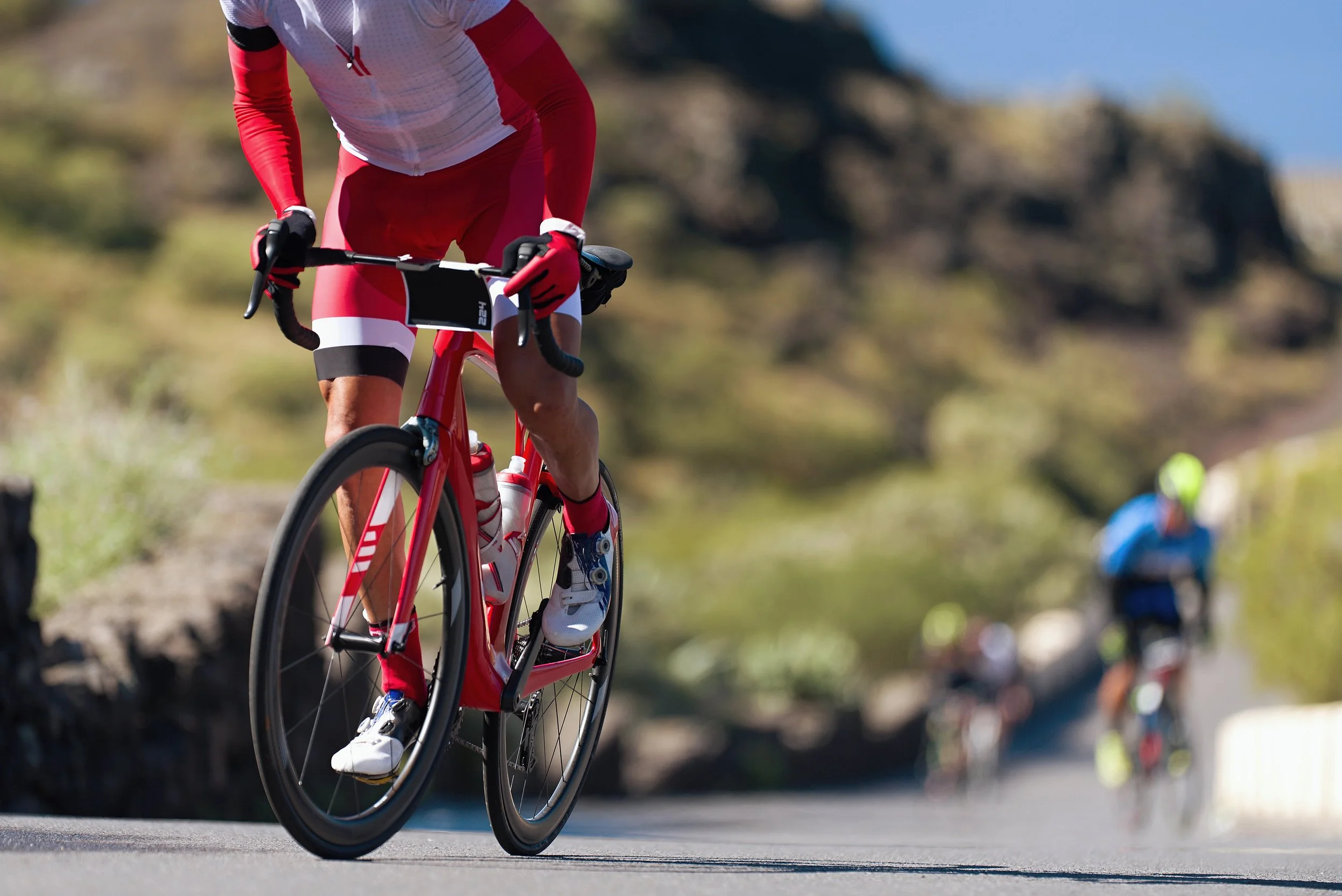
Halfway up a climb, the rider ahead stands and attacks. Your instinct screams "follow them!" So you stand, shift gears, and try to match their acceleration. Within thirty seconds your heart rate is redlined, your form is falling apart, and they're still pulling away. You sit back down defeated, having burned critical energy for no gain.
Standing isn't about strength or looking like a pro. It's a tactical tool you deploy when it provides genuine advantage. Get the timing and technique wrong, and you're sabotaging yourself before the real climbing work even begins.
The Biomechanics Reality
When seated, your weight is supported by the saddle, power comes primarily from your quads and glutes, and you can sustain efforts for extended periods. When standing, your full body weight transfers to the pedals, engaging your core and upper body while recruiting different muscle groups throughout your legs.
Research shows power output can increase 10-15% when standing, but here's the catch—energy cost also increases 5-10% (1). This means standing only provides net benefit in specific scenarios. From a biomechanical perspective, standing changes how forces transfer through your kinetic chain, loading your spine differently and altering joint angles throughout the pedal stroke.
The mistake most cyclists make is treating standing as a default climbing position rather than a strategic tool for specific situations.
When Standing Actually Helps
Standing delivers genuine advantage on short, steep pitches—typically gradients above 10% lasting less than ninety seconds. The increased power output outweighs the energy cost over these brief efforts. Standing also works brilliantly for accelerations and attacks when you need surge power to create or close gaps.
Here's what many cyclists miss: standing provides muscular relief on long climbs. After sustaining seated effort for several minutes, standing for 10-15 seconds shifts load from fatigued seated muscles to fresh standing muscles. This works only if you maintain the same power output—not accelerating, just changing muscle recruitment patterns temporarily.
The final meters to a summit or when making decisive attacks are also appropriate standing scenarios. You're emptying the tank regardless, so the energy cost doesn't matter.
When Standing Hurts Performance
On long, sustained climbs at steady gradients between 4-8%, standing typically wastes energy without performance benefit. If you're already riding at or above threshold, standing pushes you deeper into the red zone where you cannot sustain effort. Poor technique—wobbling, excessive upper body movement, losing momentum—amplifies the energy cost dramatically.
Most recreational cyclists stand too early, too often, and with technique that creates more problems than it solves. Standing increases frontal area in headwinds, making it particularly inefficient when fighting both gravity and wind resistance simultaneously.
The Technique Foundation
Proper standing technique requires core engagement before you leave the saddle. Your spine needs bracing to handle the increased loading that comes with unsupported body weight. The transition should be smooth—not a sudden lurch that disrupts momentum and wastes energy.
As you stand, your bike will sway 4-6 inches side to side with each pedal stroke while your body remains relatively stable. Your hands pull on the bars opposite the pushing leg, creating counterbalance. This coordination feels unnatural initially but becomes automatic with practice.
The gear selection matters enormously. Most cyclists make the mistake of standing in the same gear they were using seated. This creates too-low cadence and excessive stress on knee joints. Shifting up 1-2 gears as you stand maintains appropriate cadence and protects your joints from excessive force.
The Gradient Strategy
Different slopes demand different approaches. On 4-6% grades, staying seated should be your default unless you're attacking or need brief muscular relief. These moderate gradients don't require the extra power standing provides, and the energy cost isn't justified.
As gradients steepen to 7-9%, you might incorporate brief standing periods—perhaps 10-20 seconds every few minutes for relief. But seated climbing remains your primary strategy. Above 10%, the equation shifts, and standing becomes more necessary for power production, though efforts should still be kept relatively short when possible.
The key principle: if you can maintain power and cadence while seated comfortably, that's almost always more efficient than standing.
Common Standing Mistakes
Standing too early in climbs wastes the tool when you'll actually need it later. Poor gear selection—forgetting to shift up when standing or back down when sitting—crushes momentum and multiplies energy cost. Death-gripping the handlebars creates upper body tension that radiates through your entire kinetic chain, reducing efficiency.
Perhaps the biggest mistake is standing simply because others do.
Your optimal climbing strategy depends on your strength profile, the specific gradient, and your tactical situation.
Ride your ride, not theirs!
FAQ
Should I always stand on steep sections? Not necessarily. If you can maintain power and cadence seated, that's often more efficient. Stand when you need power surge, relief, or terrain demands it—not automatically because gradient increased.
Why do I get lower back pain when standing? Usually indicates weak core strength or poor technique. Your core should brace before standing to protect your spine. Consider focusing on seated climbing while building core strength off-bike.
How long should I stay standing? Depends on purpose. Relief stands last 10-20 seconds. Attacks last 20-45 seconds. As a general rule, sit down before your form starts deteriorating.
What if my bike wobbles excessively when I stand? Practice at lower speeds on moderate grades first. Focus on keeping your upper body quiet while the bike sways beneath you. Core strength work off-bike dramatically improves standing stability.
REFERENCES
1. Caldwell, G.E., Hagberg, J.M., McCole, S.D., & Li, L. (1998). Lower extremity joint moments during uphill cycling. Journal of Applied Biomechanics, 14(3), 245-259.
2. Li, L. & Caldwell, G.E. (1998). Muscular coordination in cycling: effect of surface incline and posture. Journal of Applied Physiology, 85(3), 927-934.
3. Stone, C. & Hull, M.L. (1993). Rider/bicycle interaction loads during standing treadmill cycling. Journal of Applied Biomechanics, 9(3), 202-218.