Two Things Cycling Won't Do For You After Age 40
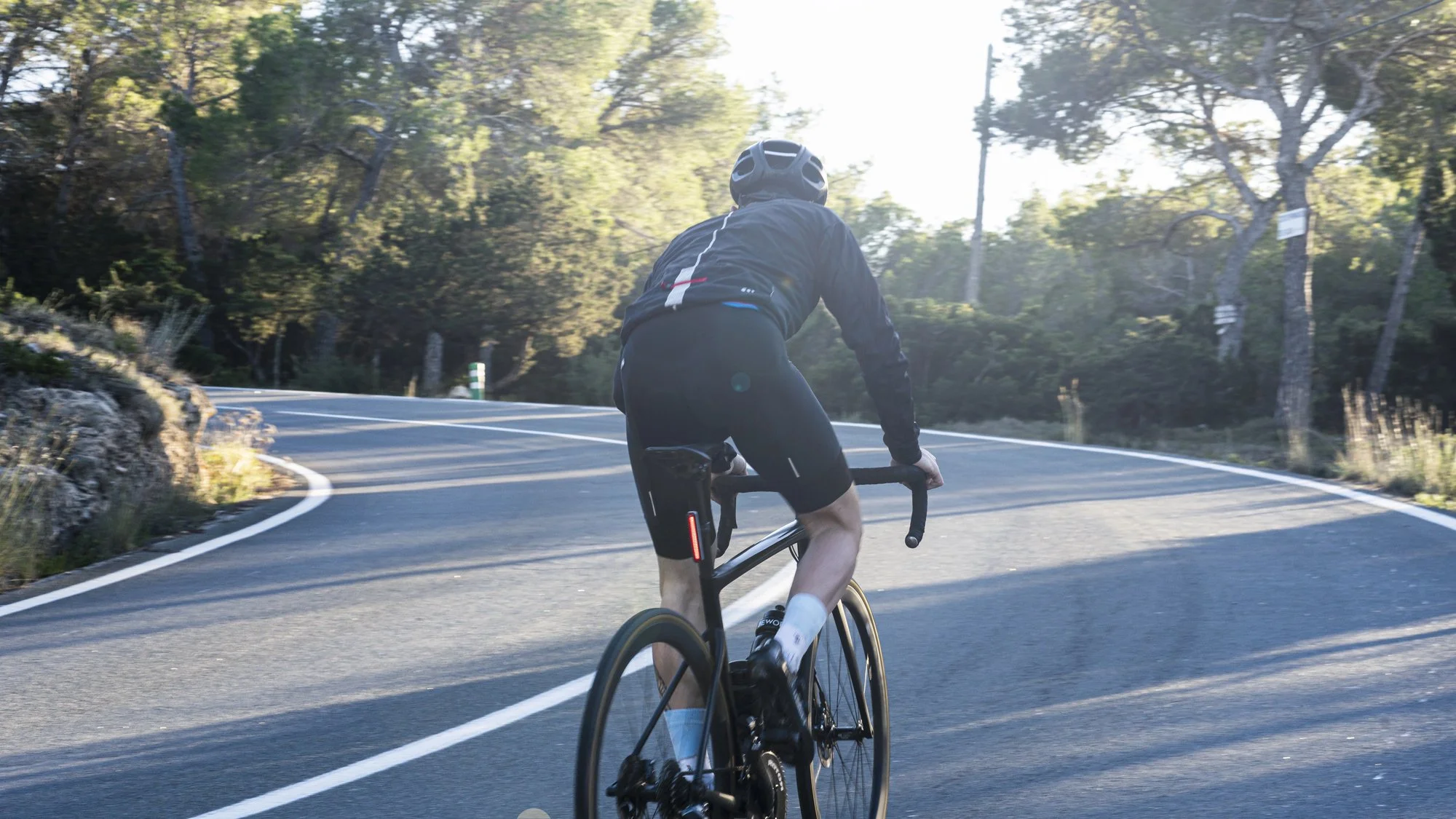
Most people assume that if you're fit enough to ride for hours, climb well and hold a wheel in a fast group, then the rest of your body must be in good shape too.
But there are two things all those hours on the bike don't do... even when your riding is going well.
One is bone health. The other is muscle strength.
You may be someone who has been riding strong and fast and well for years. And this is great. But over time, weakness and injury risk can start to creep in, and bone health and muscle strength are often a big part of why.
Cycling Does Very Little For Your Skeleton.
Cycling is a 'non-weight-bearing' sport. The saddle and pedals hold you up, so your skeleton never gets knocked or jarred the way it does when you run or jump.
Bone is a 'use it or lose it' tissue. Load it and strain it, and it gets denser and stronger. Leave it unloaded, and it doesn't... in fact, the opposite starts to occur. Cycling is smooth, seated pedalling and this barely loads your bone at all.
Highly trained masters cyclists have been shown to have lower bone mineral density than younger cyclists, with many in the osteoporotic (weak and brittle bones) range [1]. In one study comparing male cyclists with runners, the cyclists were around seven times more likely to have osteopenia (advanced bone weakening but not yet full osteoporosis)of the spine compared to runners[2]. Like... WHOA!
Seven times. And these were fit, active, healthy men... So, here's a key take away... get your bones checked if your getting close to 50 and haven't really loaded them properly in years!!
Riding Doesn't Stop The Loss of The Muscle You Don't Want To Lose.
From around 40, muscle mass (size of your muscle) is lost at roughly 1% a year... IF NOTHING IS DONE to counter it. This is called 'sarcopenia'… the gradual, age-related loss of muscle. 1% doesn't sound like much... but after 20yrs, when you're 60... thats a 20% loss! At 70.... 30%!!! And this is at an age when you really don't want to be losing it!!
But it's not purely the mass loss that is the concern... it's the strength that that muscle mass provides and that strength is lost even faster, sometimes two to five times faster!!! [3]. To add salt to the wound.... This loss of strength and bulk is skewed towards the loss of fast-twitch (type II) fibres first. The very fibres you need for a punchy climb, a surge to close a gap or a sprint for the sign.
The sad reality is that general cycling with some intensity efforts doesn't protect these well. Endurance riding is a lot of low-force contractions, repeated over and over. It builds a wonderful aerobic engine with some high end power if you train it... but it does very little to keep your bone health, raw strength and power high.
Why Is This Important?
On the bike, if your bone health is lower, the result is weaker bones. Weaker bones means the risk of a fracture occurring if you fall, on top of other injures. On the muscle side, if your bulk and strength has reduced, you are missing out on the performance benefits that comes with stronger legs! Less leg strength going through the pedals means climbs get harder, surges hurt more and you get dropped where you used to hang on.
And it's not only about cycling performance. Off the bike, weaker bones and reduced size / strength of muscles has a direct correlation to health and quality of life. Muscle and bone are what keep you strong, mobile and independent for the years and decades of living (and riding) ahead. The more reduced they are now, the more you have to catch up on later in life... when it really maters. That could be the real reason to pay attention.
Strength Work Is The Answer To Both.
One thing addresses both problems at once. And it isn't more riding.
It's off-bike strength work: Proper, loaded, progressive strength work.
Loaded resistance training is the strongest signal you can give bone to hold and rebuild density. Research shows this. Even in middle aged and older people... A twice-weekly programme of heavier resistance and impact work safely improves bone strength[4]. This is important because there is a catch: As we get older, muscle responds a little less to the same training than it used to, so... You have to be deliberate in loaded resistance training as the years go on. Its a highly reliable way (the only way really) to hold onto muscle and power as you age.
Here's a few tips and pointers to start:
Lift with genuine load, not just light 'toning' weights, in compound movements… (i.e. a squat pattern) and for a challenging number of reps and sets.
Aim for two sessions a week. One is far better than none but two is better. Don't neglect the upper body and core, although your focus is on legs for your cycling.
Eat enough protein per day (many older people and masters riders eat too little)
Conclusion
Hours and hours on your bike builds a brilliant engine. But it does very little for your skeletal frame and the muscles around it. After 40, both start to go backwards unless you set out to train them on purpose.
The fix isn't complicated. A little loaded strength work, done consistently, protects your bones, your power and your ability to keep riding strong for years to come.
It's never too late to start, bone and muscle respond to the right training at any age and yours will thank you and pay you back with many years, decades even, of good quality cycling and living.
Frequently Asked Questions
Doesn't all my climbing count as strength work? Not really. Climbing is hard, but it's still relatively low-force effort repeated many times. It builds aerobic fitness far more than the actual off bike strength work and bone loading that counter age-related decline.
Will lifting weights make me heavier and slower on the climbs? No, not if it's done sensibly to build strength and power without adding bulk. For many masters cyclists it actually helps your power to weight and how long you can last, not the opposite. Even if you gain 1 or 3 kg in lean mass.
I'm in my 60s. Is it too late, or too risky, to start? It's neither, provided you start appropriately. Studies in older adults with low bone mass show heavier resistance training can be both safe and effective when introduced and progressed properly. If you have any health conditions, get medical clearance first.
How quickly will I notice a difference? Strength and how your legs feel on the climbs can improve within a few weeks. Bone adapts far more slowly, over many months, so consistency over the long term is what really counts.
References
Nichols, J.F., Palmer, J.E., & Levy, S.S. (2003). Low bone mineral density in highly trained male master cyclists. Osteoporosis International, 14(8), 644–649. https://doi.org/10.1007/s00198-003-1418-z
Rector, R.S., Rogers, R., Ruebel, M., & Hinton, P.S. (2008). Participation in road cycling vs running is associated with lower bone mineral density in men. Metabolism, 57(2), 226–232. https://doi.org/10.1016/j.metabol.2007.09.005
Mitchell, W.K., Williams, J., Atherton, P., Larvin, M., Lund, J., & Narici, M. (2012). Sarcopenia, dynapenia, and the impact of advancing age on human skeletal muscle size and strength; a quantitative review. Frontiers in Physiology, 3, 260. https://doi.org/10.3389/fphys.2012.00260
Harding, A.T., Weeks, B.K., Lambert, C., Watson, S.L., Weis, L.J., & Beck, B.R. (2020). Effects of supervised high-intensity resistance and impact training or machine-based isometric training on regional bone geometry and strength in middle-aged and older men with low bone mass: The LIFTMOR-M semi-randomised controlled trial. Bone, 136, 115362. https://doi.org/10.1016/j.bone.2020.115362