Why Do So Many Cyclists Get Sick Right After Their Biggest Training Week?
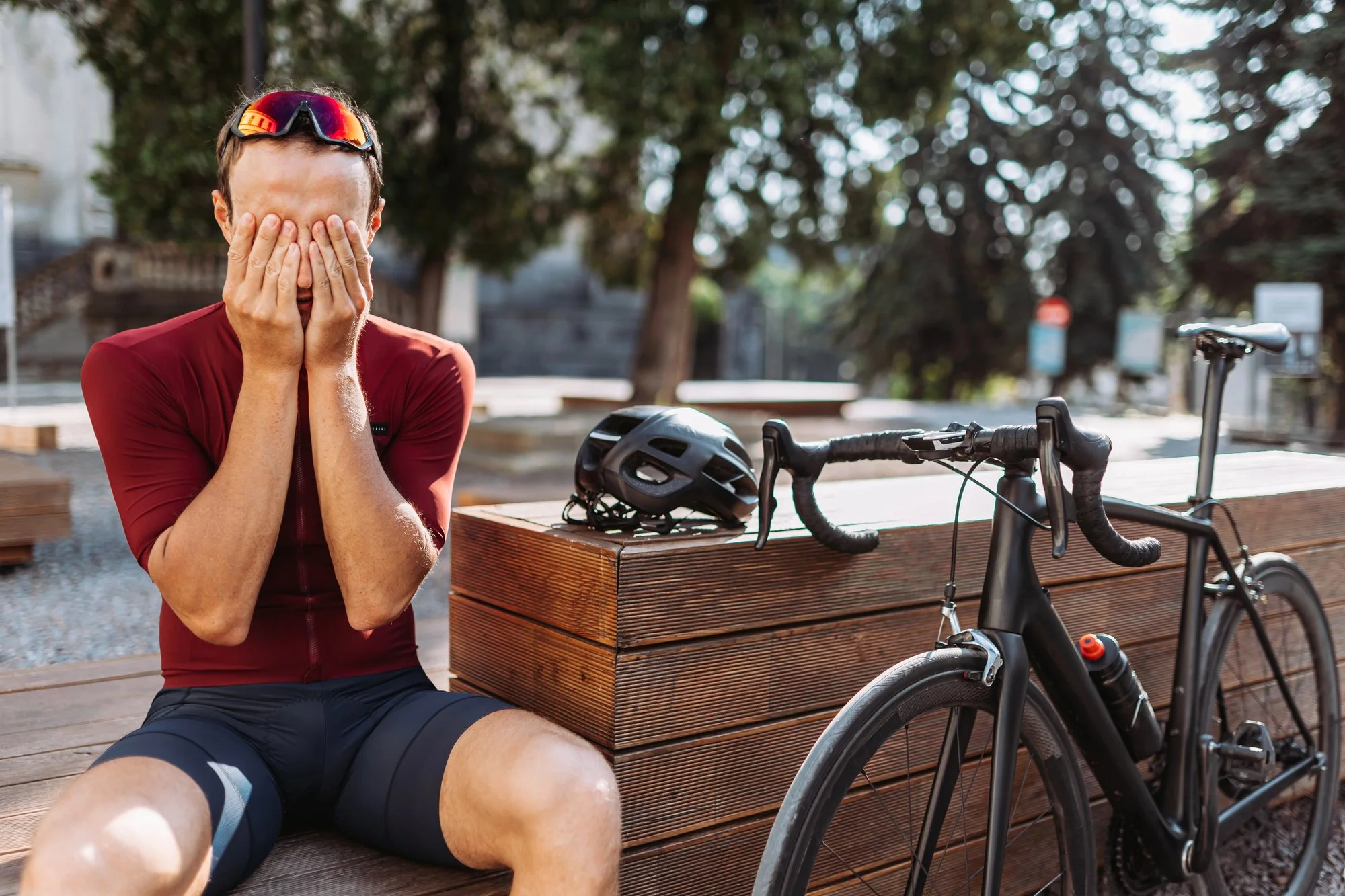
Do you ever notice something like this that commonly happens...? You've just finished a training block where everything clicked. You hit every session, your legs were able to handle all and more, the numbers on your screen were some of the best you've seen in months, and you're happily thinking you may have turned a corner in your training.
And then, a few days later, your throat starts to tickle, your head feels like it's stuffed with cotton wool, and you end up sidelined with a cold that you are sure you didn't catch off anyone…
This is a very common thing. You put in the work, you do everything right, and your reward is a week off the bike feeling sorry for yourself.
So what's actually going on here? Why does a cold so often come after a hard training block?
What's Really Happening When You Load Up?
The traditional explanation is this... You train hard, that hard training knocks your immune system down for a while, and while it's down you are susceptible to a bug that capitalises on this opportunity to make you get sick. But this is not entirely accurate.
One of the main original research findings that solidified this viewpoint is this: A well-known study followed more than 2,300 runners around the Los Angeles Marathon and found that around 13% of them came down with something in the week afterwards, compared to a small 2% of the runners who'd trained just the same but didn't actually race [1]. The ones who did the most training and ran the biggest weekly mileage were twice as likely to get sick.
So something's clearly going on when you increase load significantly.
The classic explanation is this thing called the "opportunity window" or "open window". The idea is that for a few hours to a day after a hard ride your defences drop and leave you exposed to a bug that causes sickness.
The Simple "Opportunity Window" For A Bug Is Not Entirely Correct
It logically makes sense that your immune cells, if you measure them with a blood test, drop somewhat after a big session or training block…
But, more recent research is now showing that dropping immune cell number is not immune cells being eliminated. They drop when you measure them because they leave the bloodstream, which is where they are measured from, and enter your body's tissues to do their job... to go hunting for anything that shouldn't be there [2]. So, the drop in "immunity" is not actually your immune system suppressed. It's your immune system doing its job.
Whilst this does leave you susceptible in the short term it also does the opposite in the long term. Riding regularly, week in and week out, year after year, actually makes your immune system stronger over time rather than weaker [2]. Thats good news. But why the cold and knocked out feeling?
So What Actually Tips You Over?
Further recent research shows that it's not the training load on its own that causes the issues. Its actually everything else going on in your life along with your training that has the biggest impact - poor sleep, a great heap of life stress, less-than-ideal nutrition etc etc, all piled on top of the riding but not focussed in a way that supports the increased training and riding load [3].
Your body doesn't distinguish between seperate "loads"... i.e "training" load and "the rest of my life" load. It's all load. A stressful work week, kids up half the night, takeaway meals on the run… all that mixed together is too much for your body to handle. And then, when you add in an increase in training volume or intensity, or a big training block for an event, thats the preverbal straw that breaks the camels back.
As an aside, if you were to find yourself in this situation, with this cold-like feeling, seeing the GP and getting tested will most likely reveal no infection at all, of any kind. Meaning, you haven't picked up a big at all. Thats great news! (Even if you're feeling like you've been hit by a bus). Because it means recovery is quicker and preventing it in the future is easier, if you know what is going on, why and how to stop it from happening.
It Hits Harder Once You're Past 40
The older you get, the less of a buffer margin you have against this. Your immune system does slowly reduce in its ability to mobilise and fight, both in speed and sheer volume. The fancy medical term for this is 'immunosenescence' [4] with sleep being one of the main factors, becoming less of the deep, restorative kind as well as life, in general, rarely getting any quieter or less stressful in your 40s and 50s. But this doesn't mean you are getting too old to train hard.
So, if you then add a big training block onto a recovery base that isn't as robust as it used to be, you can see how your reserve capacity can be exhausted quickly.
However, all the research on the ageing immune system also shows that staying fit and riding consistently actually slows the whole process right down. Lifelong riders consistently show an immune system that compares to younger sedentary people [4].
Conclusion
So, the big takeaway is this... The cold-like feeling and symptoms are not actually a cold and you're not suddenly becoming too old to train hard.
What it's really telling you is that the total load… riding, work, family, short nights sleep, skipped quality meals… added up to a bit more than your body had in the tank to recover from. That's it, really.
Riding consistently and training hard is a good thing in the long run… as long as you look after everything else going on in your life around it, in a way that supports it.
You don't have to train less or ride any softer. You just have to manage the days around your hardest riding weeks as seriously as you plan the hard riding itself. Get that bit right, and that cold-like feeling after hard rides or hard training blocks will be lessened in intensity or, ideally, not come about at all.
Frequently Asked Questions
Does hard training actually wreck your immune system?
Not really. A dip in immune cell number after a hard ride is not your immune system weakening, it more about your immune system being stimulated to work and riding regularly seems to toughen your immune system up over the long run rather than wear it down. The main issue is a big load stacking up on top of poor recovery, rather than any one hard ride on its own.
Should I ride if I feel a cold coming on?
The rough rule to go by… if it's all above the neck, a stuffy nose or a bit of a scratchy throat, an easy spin is usually fine. If it's below the neck, or you've got a fever, aching, anything on the chest, then it's "best to rest". And if you honestly can't tell, treat it as a rest day anyway. Two easy days off is better than trying to push through and digging yourself into a two-week hole. (And as always with this sort of thing, if you're really not sure, go see your GP.)
Why does this happen more now than it did in my 30s?
A few things tend to "gang up" on you at once. Your immune system loses a bit of its edge age, your sleep often isn't what it once was, and life very rarely gets less stressful into your 40s and 50s. So the same hard block relies on a smaller recovery base than it used to. The answer isn't always to train less, though… it's to recover better and be smarter around the training you're already doing.
References
1. Nieman, D. C., Johanssen, L. M., Lee, J. W., & Arabatzis, K. (1990). Infectious episodes in runners before and after the Los Angeles Marathon. Journal of Sports Medicine and Physical Fitness, 30(3), 316–328. https://pubmed.ncbi.nlm.nih.gov/2266764/
2. Campbell, J. P., & Turner, J. E. (2018). Debunking the myth of exercise-induced immune suppression: Redefining the impact of exercise on immunological health across the lifespan. Frontiers in Immunology, 9, 648. https://doi.org/10.3389/fimmu.2018.00648
3. König, D., Grathwohl, D., Weinstock, C., Northoff, H., & Berg, A. (2000). Upper respiratory tract infection in athletes: Influence of lifestyle, type of sport, training effort, and immunostimulant intake. Exercise Immunology Review, 6, 102–120. https://pubmed.ncbi.nlm.nih.gov/10919064/
4. Turner, J. E. (2016). Is immunosenescence influenced by our lifetime "dose" of exercise? Biogerontology, 17(3), 581–602. https://doi.org/10.1007/s10522-016-9642-z