When Should You Ride Through A Niggle, And When Should You Back Off?
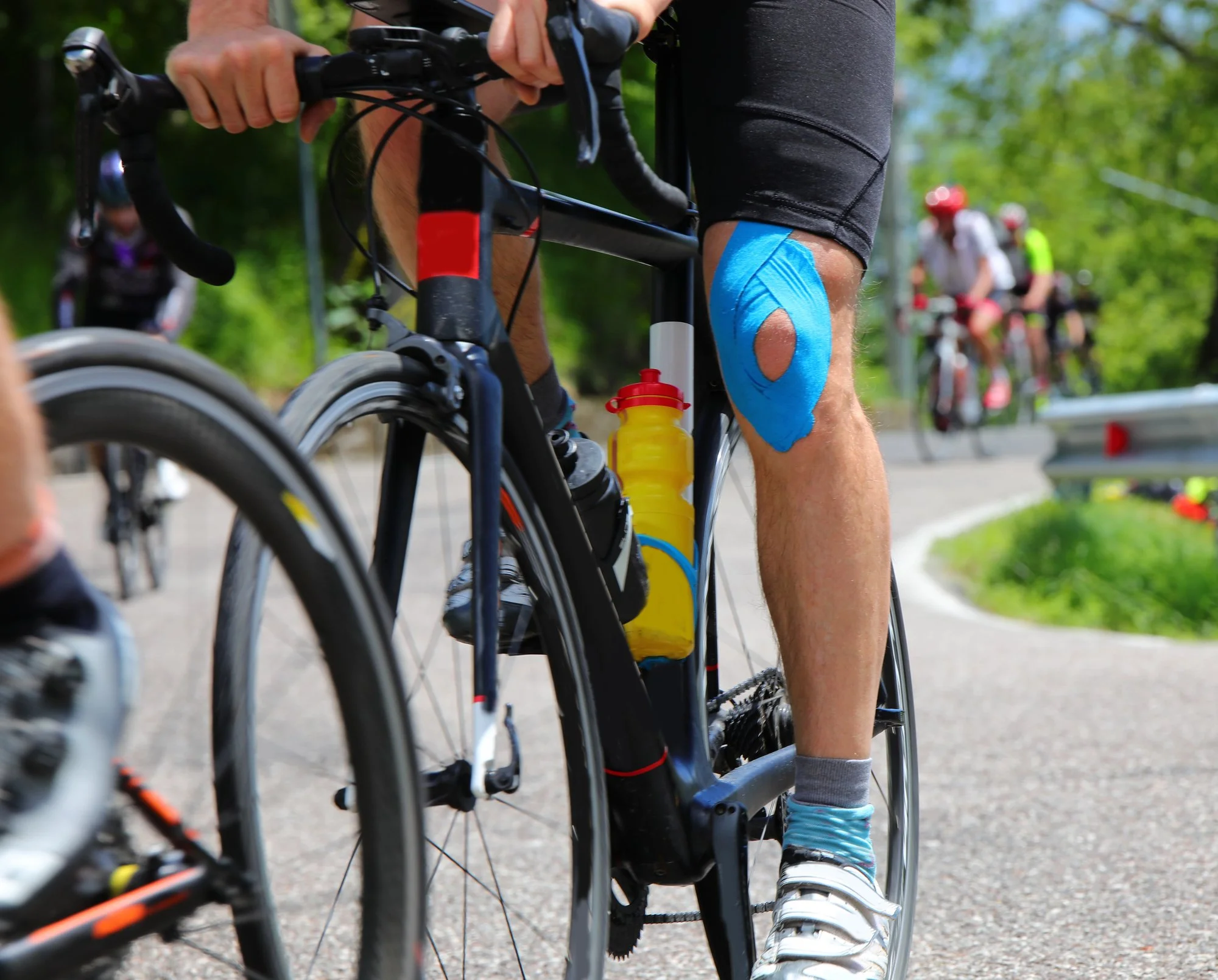
Most cyclists are carrying some form of an ache, niggle or a little pain. A little niggle in the knee that shows up at about the same point on every ride. A tightness low in the back that's been hanging about for a fortnight. An ache in the Achilles that's there for the first ten minutes butsettles once the legs are properly warm.
And along with this comes a tradeoff argument in your head. One voice tells you to harden up, it's nothing, ride through it, everyone's carrying something. The other tells you to back off right now or you'll turn a niggle into a proper injury. Both of these arguments are reasonable, and that's exactly the problem, because they can't both be right.
So how do you actually tell them apart? When is a niggle just background noise you can ride through, and when is it your body saying, "hey, its better to ease off"?
First, The Good News… Niggles Are Normal
If you're carrying the odd ache, you're in very good company. Well over half of professional road cyclists deal with lower back pain and more than a third experience anterior knee pain [1]. Note that these are full-time athletes with the best support money can buy to help them, and they're still have aches, pains and niggles!
So, take heart, not every niggle means something's seriously wrong with you. If that were the case, given that the data shows more than 50% of cyclists experience some niggle or other, there wouldn't be many cyclists left riding! For the vast majority of 'everyday aches', its a matter of acknowledging them and working with them.
So Where Do They Actually Come From?
Most of the everyday niggles a masters cyclist picks up aren't really an injury. They're an overuse thing… meaning your body tissues are letting you know they've had a bit more asked of them lately than they were quite ready for.
It's the "more than they were ready for" is the key to understand. The research on training load, and from what I see in my own clinical physio practice, consistently shows that it's not the size of the 'over' load on its own but the size of the jump in that loan [2]. It's the sudden extra... i.e. A week where you doubled your climbing, a new saddle position you changed and then went straight out and rode like normal without an adjustment period or a block of riding where you piled on intensity, distance and/or back-to-back days all at once because you were feeling good and your legs were feeling strong.
The exact way to measure all of this is still argued over in the sports science world, and there have been a few formulas put forward to calculate this load objectively, but they haven't really held up to scrutiny. However, the underlying idea is this... fitness that you build gradually protects you, and loads that jump above what you're used to are what can start to do damage.
So, a niggle can be a sign that you are starting to improve the protection or it can be the start of the damage. It depends on the load. In the moment, it's not a sure sign that your body is coming apart.
Why "Just Rest It Completely" Is Usually The Wrong First Move
Here's where a lot of well-meaning riders often get it backwards and wrong.
The instinct is often to stop completely and approach it with the mindset of wrapping up in cotton wool to protect it and wait for it to feel perfect again. This feels like the safe and sensible to do. But for a lot of these overuse niggles, complete rest is the very thing that keeps you stuck, because the tissue that's grumbling more often than not needs some amount of load to calm down and rebuild, not the total absence of it. This is especially true of tendons... and tendons are often the source of niggles in cyclists.
Check the research... people with a painful Achilles who carried on loading it in a controlled, carefully monitored way ended up doing just as well as the people who were told to rest it right up [3]. Loading a sore tendon sensibly doesn't set you back one bit.
The key points here are "controlled", "monitored" and "the right amount" of loading. Pain that stays mild, settles down soon after you're off the bike, and isn't creeping up day after day is usually the kind of niggle you can keep gently working around as you build protective strength. Exactly where that load balance is for you and how to progress it often needs a professionals input but, stick to less is more to be safe.
The Niggles You Don't Ride Through
That said, some things are simply not for pushing through.
Pain that's sharp or stabbing rather than a dull background ache, pain that's clearly getting worse ride after ride instead of settling, anything that swells, and anything that nags at you at rest or wakes you in the night. The same goes for anything that changes how you actually move... i.e. pedalling or walking a bit differently. And pins and needles, numbness or a shooting pain need to be checked out by a professional, even if its to be cleared of anything sinister going on.
Why Is This Important At Masters Age?
All of this holds true at any age, but the reason it matters more as the years tick on is what's going on in the tissues themselves.
As you get older, your tendons change. They get a little stiffer, the turnover of the tissue deep in the core of the tendon slows right down, and repair timeframes are lengthened [4]. A niggle you'd have shrugged off without a thought in your twenties can take longer to clear now, meaning the "just tough it out" approach gets riskier the older you get.
But loading, resistance training in particular, can actively slow down, even reverse, those tissue changes in the tendon [4]. So doing less and less with an ageing, grumbly tendon turns out to be pretty much the opposite of what it needs. Looked after properly, the right kind of loading is doing you good and protecting you!
Conclusion
Listening to your body and getting feel for the extent of a niggle and how much load you can, or should apply is the key. You may need a health professional guiding you through it early on until you know exactly what's going on.
However, most of the time, a niggle should be treated as just feedback. It's your body tissue letting you know that the balance of load and recovery is out of kilter, usually after a sudden change or a jump in load. Some niggles can be 'ridden through' if they are not worsening, whilst you build gradual and controlled load that will protect you but other niggles (sharp, swelling, worsening or nerve related) are telling you to stop and get some help.
Getting good at reading your body so you can confidently make decisions about how much load to apply is both an art and science and takes a bit of time to smooth out, but its well worth doing so you can maximise your chance of enjoying years of good fun and high performing cycling.
Frequently Asked Questions
Is it ever actually okay to ride with pain?
Often, yes, though it depends entirely on the kind of pain. A mild, familiar ache that stays low, settles soon after you're off the bike and isn't building from one day to the next is usually fine to keep gently working around. Sharp pain, swelling, pain that's worsening ride after ride, or anything with numbness or pins and needles in it is where you stop riding for a bit and get looked at.
If rest isn't the answer, doesn't that mean I should just train through everything?
No. The point isn't that rest is useless… it's that complete rest for every single ache, often leaves you stuck, because a lot of body tissues need the right kind of load to recover.
Why do I seem to pick up more niggles now than I used to?
A mix of things, but a big one is that your tendons and connective tissue change with age… they stiffen a little and they repair more slowly than they once did… so the same loads take a bit more looking after than they used to but consistent progressive loading and off-bike strength work helps keep that tissue robust.
When should I actually go and see someone about it?
Anything sharp, swelling, worsening, waking you at night, or involving numbness or shooting pain should be professional assessed. Minor grumbles that continue for more than a couple weeks without any sign of improving are also worth getting professionally assessed. The point is to catch things early, which can make it quicker and simpler to fix and/or avoid anything potentially big and sinister.
References
1. Clarsen, B., Krosshaug, T., & Bahr, R. (2010). Overuse injuries in professional road cyclists. American Journal of Sports Medicine, 38(12), 2494–2501. https://doi.org/10.1177/0363546510376816
2. Gabbett, T. J. (2016). The training-injury prevention paradox: should athletes be training smarter and harder? British Journal of Sports Medicine, 50(5), 273–280. https://doi.org/10.1136/bjsports-2015-095788
3. Silbernagel, K. G., Thomeé, R., Eriksson, B. I., & Karlsson, J. (2007). Continued sports activity, using a pain-monitoring model, during rehabilitation in patients with Achilles tendinopathy: A randomized controlled study. American Journal of Sports Medicine, 35(6), 897–906. https://doi.org/10.1177/0363546506298279
4. Svensson, R. B., Heinemeier, K. M., Couppé, C., Kjaer, M., & Magnusson, S. P. (2016). Effect of aging and exercise on the tendon. Journal of Applied Physiology, 121(6), 1237–1246. https://doi.org/10.1152/japplphysiol.00328.2016